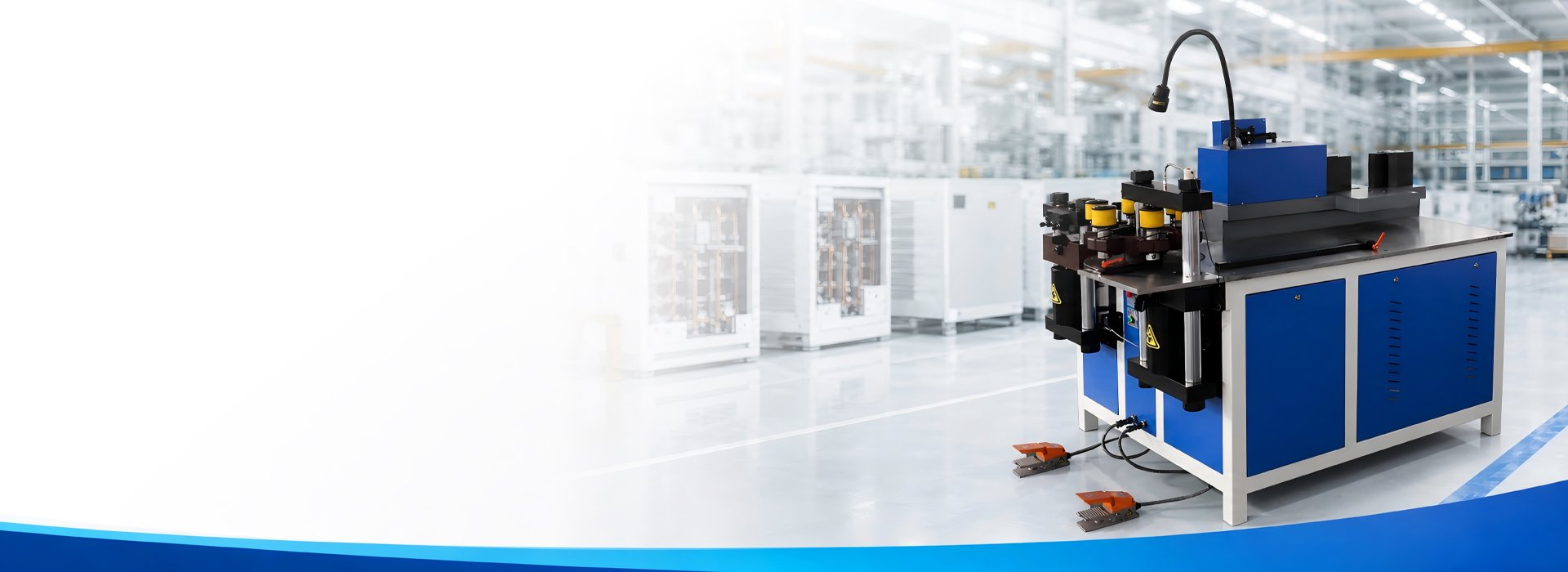
How We Selected the Manufacturers
| Factor | Evidence |
| Product Range | Current models and product pages |
| CNC Capability | Positioning, angle control, program storage and feeding |
| Processing Range | Stated width, thickness, hole and bending limits |
| Tooling | Standard, optional and drawing-based dies |
| Factory Evidence | Workshop, assembly, FAT and test materials |
| Export Support | Manuals, training, parts and technical service |
We reviewed current company pages, product pages, machine specifications and factory materials available as of July 23,2026.Companies were included when we could identify a current business identity,a relevant busbar-machine product range and at least one named machine model with publicly accessible technical information. The list is not intended to cover every Chinese supplier.Machine capacities are manufacturer-stated. We did not independently test every machine or audit every factory. Buyers should confirm the legal supplier,current specifications, tooling, FAT procedure and service terms before ordering.
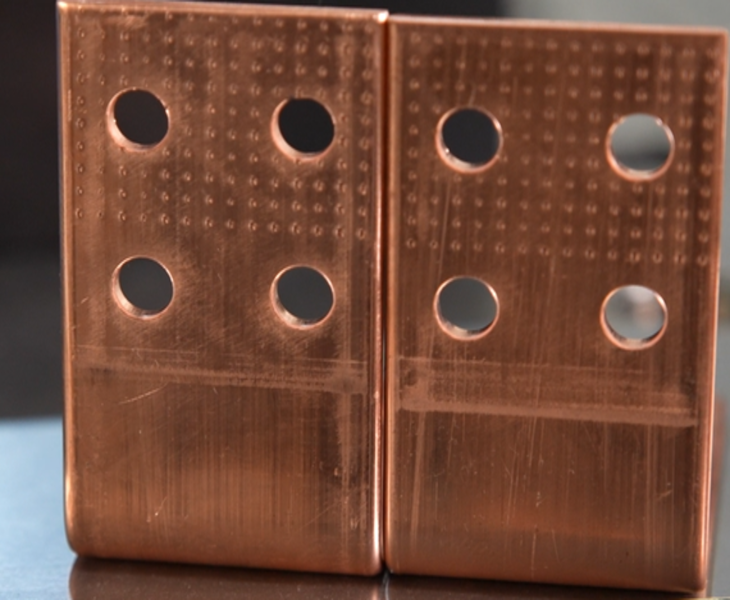
10 Manufacturers at a Glance
Table order is not a quality ranking. Capacities are manufacturer-stated and apply only to the referenced models.
| Manufacturer and Location | Referenced Models | Stated Capacity Width × Thickness | Best For | Official Sources |
| Jinan Fenghua CNC Equipment Co., Ltd., Jinan, Shandong | BSSK-303 | Flat bending up to 250 mm W × 16 mm T. Shearing up to 250 mm W × 20 mm T. Vertical bending up to 100 mm W × 10 mm T. Published punching-die range Φ4.3–Φ30. Applicable to copper and aluminum busbars. | Drawing-based machine and tooling selection for mixed-specification production | BSSK-303 product page |
| MAC, overseas brand associated with Shandong Lijian, Jinan, Shandong | MAC-303CN PRO, MAC-503CN PRO, MAC-803CN PRO | MAC-303CN PRO 160 mm W × 12 mm T and 300 kN. MAC-503CN PRO 250 mm W × 16 mm T and 500 kN. MAC-803CN PRO 300 mm W × 20 mm T and 800 kN. Published punching-die range Φ4–Φ30. | Buyers comparing three capacity levels within one CNC 3-in-1 series | CNC 3-in-1 machine series, technical data PDF |
| SunShine Busbar Machinery Manufacturing Co., Ltd., Jinan, Shandong | SS-30-3CNC PRO, SS-50-3CNC PRO, SS-80-3NC | SS-30-3CNC PRO 160 mm W × 12 mm T and 300 kN. SS-50-3CNC PRO 250 mm W × 16 mm T and 500 kN. SS-80-3NC 300 mm W × 20 mm T and 800 kN. | Buyers comparing 300, 500 and 800 kN 3-in-1 configurations | CNC 3-in-1 machine series, machine catalogue PDF |
| Jinan Jingpeng CNC Machinery Co., Ltd., Jinan, Shandong | JPMX-303ESK | Maximum busbar size 160 mm W × 12 mm T. Nominal force 300 kN. Applicable to copper and aluminum busbars. Nonstandard hole dies are available subject to confirmation. | Buyers comparing integrated 3-in-1 processing with standalone CNC equipment | JPMX-303ESK specification PDF, technical data sheet |
| Jinan Deshang CNC Equipment Co., Ltd., Jinan, Shandong | DS-303SK-B, DS-503SK-B, DS-803SK-B | DS-303SK-B 160 mm W × 15 mm T, 300 kN and Φ4.3–Φ30. DS-503SK-B 260 mm W × 16 mm T, 500 kN and Φ4.3–Φ36. DS-803SK-B 300 mm W × 20 mm T, 800 kN and Φ4.3–Φ36. | Buyers comparing 300, 500 and 800 kN hydraulic machines | DS-303SK-B product page, series specifications |
| Suzhou Kiande Electric Co., Ltd., Suzhou, Jiangsu | KD-DTYTJ-C/A-4.5(6), KD-LJP-3 | KD-DTYTJ-C/A-4.5(6) conductor length 1,200–6,000 mm, width 140–300 mm and thickness 2–6 mm. KD-LJP-3 length up to 6,000 mm, width 100–140 mm and thickness 2–4.5 mm. | Busduct conductor and joint-bar production systems | KD-DTYTJ-C/A-4.5(6) product page, KD-LJP-3 product page |
| MOTI Industrial, supplier brand based in Jinan, Shandong | MOTI-30-3NC, MOTI-50-3NC, MOTI-80-3NC | MOTI-30-3NC 160 mm W × 12 mm T, 300 kN and Φ4.3–Φ25. MOTI-50-3NC 250 mm W × 16 mm T, 500 kN and Φ4.3–Φ34. MOTI-80-3NC 300 mm W × 20 mm T, 800 kN and Φ4.3–Φ34. | Buyers comparing three CNC 3-in-1 capacity levels | CNC 3-in-1 specifications, MOTI-80-3NC product page |
| Jinan Rongruida CNC Machinery Co., Ltd., Jinan, Shandong | CJ-MX902, ZW-MX160 | CJ-MX902 punching and cutting line up to 200 mm W × 16 mm T, 600 kN and Φ4.3–Φ35. ZW-MX160 bending machine up to 200 mm W × 16 mm T and 400 kN. | Automated punching and cutting combined with standalone CNC bending | CJ-MX902 product page, ZW-MX160 product page |
| LTMC, service brand of Jinan Wenzheng Enterprise Co., Ltd., Jinan, Shandong | 303U-3-C, 503U-3-C, 803U-3-C | 303U-3-C 150 mm W × 12 mm T, 300 kN and Φ4.3–Φ25. 503U-3-C 200 mm W × 16 mm T, 500 kN and Φ4.3–Φ30. 803U-3-C 250 mm W × 20 mm T, 800 kN and Φ4.3–Φ34. | Standard and heavy-duty hydraulic 3-in-1 configurations | 303U, 503U and 803U specifications, 3-in-1 product category |
| Shandong Juhui Intelligent Technology Co., Ltd., Jinan, Shandong | JHMX503-SFK-01, JHMX-803 | JHMX503-SFK-01 punching up to 250 mm W × 20 mm T, 500 kN and Φ4.3–Φ36. Shearing up to 200 mm W × 16 mm T. JHMX-803 punching and shearing up to 300 mm W × 20 mm T, 800 kN and Φ4.3–Φ36. | Processing combined with chamfering, leveling or auxiliary operations | JHMX503-SFK-01 product page, JHMX-803 product page, busbar machine range
|
Capacities are manufacturer-stated and model-specific. “Best For” descriptions are editorial assessments. Confirm all specifications before ordering.
Representative Supplier Profiles
These profiles represent four different sourcing scenarios. They are not a quality ranking.
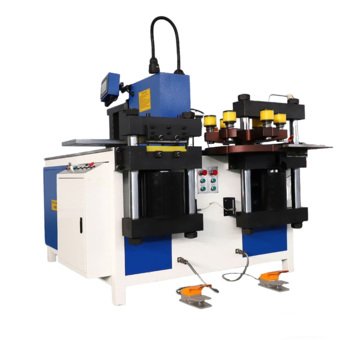
Jinan Fenghua CNC Equipment manufactures busbar processing equipment.in Jinan, Shandong. Its published product range includes.CNC busbar bending machines, hydraulic 3-in-1 machines, CNC punching and shearing lines, and double-head bending machines for busduct applications.Buyers can submit the busbar material, maximum width and thickness, hole and slot dimensions, bending direction, angle range, tolerances and expected output for model and tooling review.
Before ordering, confirm the processing range of the selected model, standard and optional dies, CNC functions, FAT procedure and service scope in the final technical agreement. FengHua is the publisher of this comparison guide.
Suzhou Kiande Electric focuses on equipment for busbar and busduct manufacturing. Its published range includes CNC busbar punching and bending machines, busduct housing equipment, insulation-processing machines, assembly lines and inspection systems.This broader product scope makes Kiande more relevant to busduct manufacturers that need multiple connected production stages rather than only a standalone 3-in-1 machine.
Buyers should verify configuration, automation boundaries, data functions, and busduct design. Also verify the contracting entity, production location, commissioning responsibilities, and service scope.
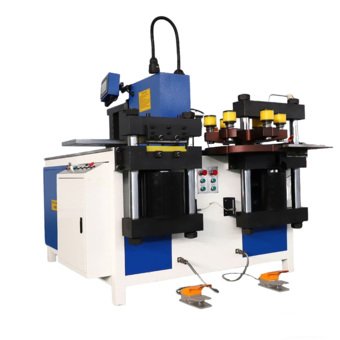
Jinan Deshang CNC Equipment publishes a range of manual, portable, hydraulic and CNC busbar processing machines.
Includes 3-in-1 configurations for punching, shearing and bending, together with standalone bending and automatic processing equipment.
Its to small and medium factories compared to hydraulic, portable and CNC configurations. Control, positioning and tooling differ by model.
Before shortlisting a model, consider busbar dimensions, control method, standard dies, vertical-bending capability, workstation concurrency and sample-testing procedure.
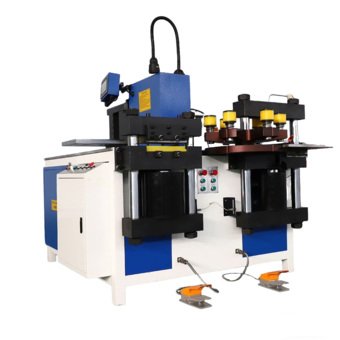
SunShine publishes a product range covering hydraulic 3-in-1 busbar machines,CNC bending machines, CNC punching equipment, portable machines and customized dies.
Its company materials describe a long-term focus on copper and aluminum busbar processing equipment and international supply. The supplier is relevant to buyers comparing integrated punching, shearing and bending functions across hydraulic and CNC-controlled configurations.
Compare control type, maximum busbar dimensions, vertical-bending capability, included dies and workstation concurrency. Treat company-history and export claims as supplier-stated unless independently supported.
The Right Busbar Machine
| Requirement | Information to Provide | Requirement | Information to Provide |
|---|---|---|---|
| Application & Material | Switchgear, transformer or busduct; copper or aluminum; grade and temper | Busbar Size & Surface | Common and maximum width, thickness and length; bare, plated or insulated |
| Required Functions | Punching, shearing, bending or integrated 3-in-1 processing | Punching Details | Hole diameter, slots, spacing, edge distance and special shapes |
| Bending Requirements | Horizontal, vertical, Z-, U- or other bends; radius and clearance | Tolerance & Drawings | Dimensional, hole-position and angle tolerance; PDF, DXF, DWG or STEP |
| Output & Capacity | Daily volume, batch size and expected future production | Power & Local Requirements | Voltage, frequency, phase and applicable electrical or safety requirements |
Manufacturers recommend the correct machine model, tooling configuration, and processing solution.
Busbar Machine Supplier Verification Checklist
| Check | What to Confirm | Check | What to Confirm |
|---|---|---|---|
| Supplier Identity | Verify the legal company name, business scope, factory address, and whether the supplier is a manufacturer or trading company. | Factory Evidence | Review workshop videos, assembly processes, production records, testing areas, and current machines under construction. |
| Machine Model | Confirm the current model code, processing functions, rated busbar capacity, and technical specifications. | Specification Match | Ensure the website, quotation, technical agreement, FAT documents, and machine nameplate show the same model and capacity. |
| Drawing Review | Confirm that the supplier has reviewed representative busbar drawings, materials, tolerances, and production requirements. | Process Sequence | Ask how the proposed machine will complete punching, shearing, and bending for the representative drawing. |
| Sample Test | Request sample processing using representative drawings and materials, with the complete test recorded. | Measurement | Confirm how dimensions, hole positions, cutting lengths, bend angles, and finished-part tolerances will be measured. |
| FAT & Acceptance | Confirm test materials, drawings, measuring tools, tolerances, results, sign-off procedures, and corrective actions. | Safety Verification | Check emergency stops, guards, interlocks, overload protection, warning labels, and applicable safety documents. |
| Components | Confirm that the actual PLC, HMI, hydraulic, pneumatic, and electrical brands match the approved configuration. | Traceability | Confirm the serial number, configuration sheet, component list, test records, parameter backup, and delivered-machine documents. |
Types of Busbar Machines
Machine selection should follow the required operations, busbar dimensions, drawing frequency, and production volume. A 3-in-1 machine can combine several functions in a limited area, while a separate automatic line may provide higher throughput for repeated batch production.

A CNC busbar bending machine controls repeated bending positions and angles for copper or aluminum busbars used in switchgear, distribution panels, transformers and busduct systems. It is most relevant when a factory processes repeated drawings, complex bending structures or frequent model changeovers.
A bending-only machine still requires separate punching and cutting processes.

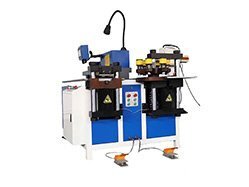
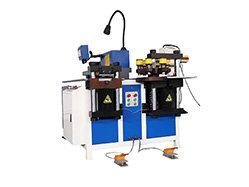
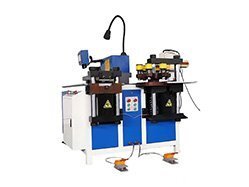
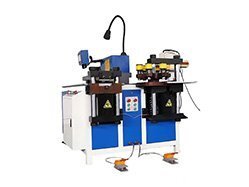
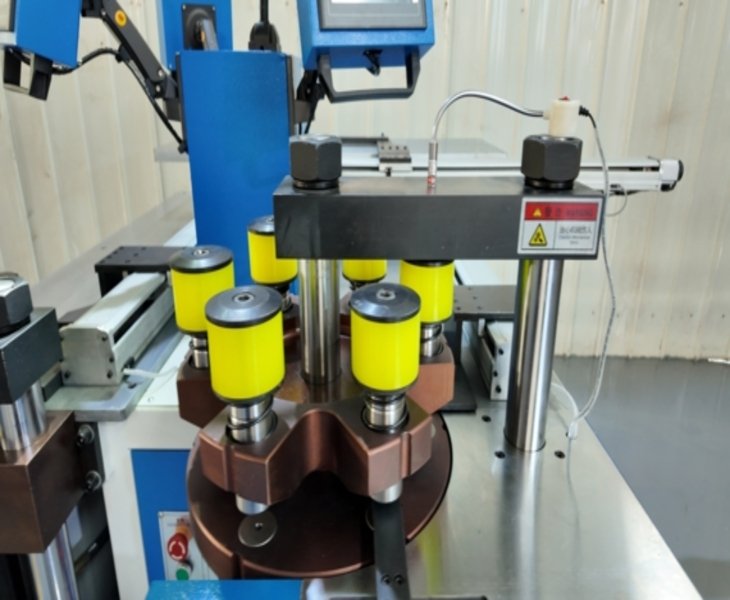
A 3-in-1 busbar processing machine combines punching, shearing, and bending stations in one machine. It is commonly considered by small and medium switchgear factories for busbar specifications but does not require a fully automated production line.
Confirm whether the three stations can work independently or simultaneously, the capacity of each station, standard punch sizes, special-die availability, vertical-bending capability and changeover time.

A CNC busbar punching and shearing machine is designed for repeatable hole positioning and fixed-length cutting.
It is most suitable for production using stable drawings and a recurring hole-feeding and positioning system, maximum busbar dimensions, positioning tolerance, largest punch diameter, slot capability, die capacity, automatic clamping, waste handling, and program-import options.

An automatic busbar processing line may combine loading, feeding, positioning, punching, shearing, bending, unloading and production-data functions.
It is primarily intended for established factories with repeatable, high-volume orders.
Evaluate the investment using cycle time measured during a supplier test, changeover time, labor requirements, expected utilization and maintenance capacity.
Choose the Right Busbar Machine
Define the workpiece before comparing machine brands. Record the busbar material and grade, common and maximum dimensions, hole and slot geometry, bending direction, minimum bend radius, required tolerances and production volume.
A compact 3-in-1 machine may be sufficient for mixed, moderate-volume production. Separate CNC punching-shearing and bending machines are more relevant when operations must run in parallel or recurring orders require higher throughput. The sample-processing results and measured cycle time rather than nominal machine capacity alone.
Verify Supplier Capability
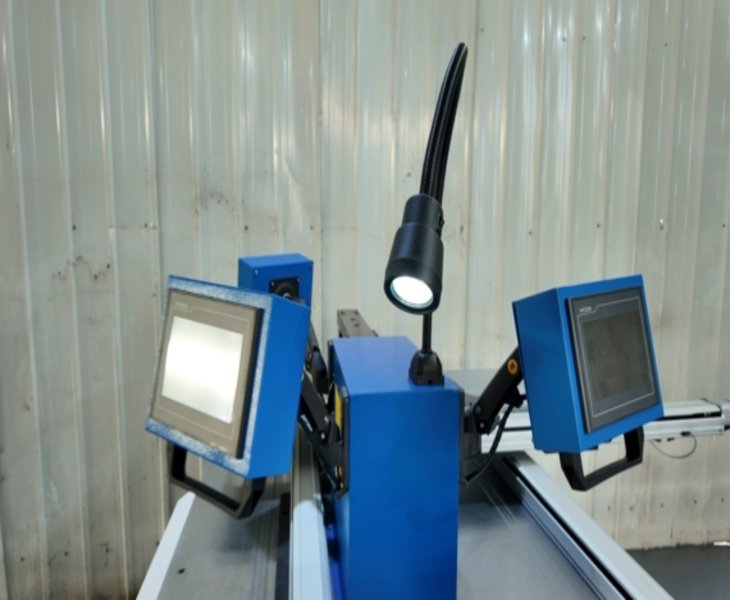
A quotation should be checked against the actual machine, tooling, and proposed processing sequence. Ask the supplier to identify the exact model, and review representative drawings; punching, shearing, and bending operations will be completed.
For higher-value projects, request a live test or FAT using agreed material,drawings, measurement methods and acceptance tolerances. Record the results and unresolved items before approving shipment.
Commercial & After-Sales Comparison
The lowest machine price does not necessarily represent the lowest total purchasing cost, including machine configuration, tooling, electrical components, FAT, packaging, installation, documentation, spare parts, and service exclusions.
The final technical agreement should identify the exact model, processing range, included functions, component brands, acceptance criteria and responsibility for corrective work.
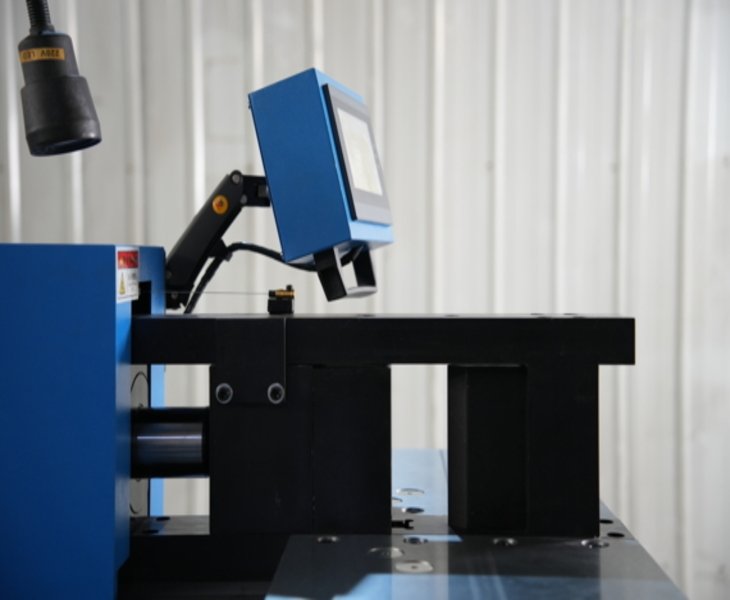
A 3-in-1 machine is usually suitable when punching, shearing and bending are needed in a limited workshop area and production volumes are moderate. Separate CNC machines must run in parallel, or drawings or higher throughput is required. Compare actual cycle time, staffing and changeover.
Many manufacturers can review customer drawings and arrange a sample test or live video; scope must be confirmed in advance. Define the material, drawings, tolerances, inspection method, and whether the tested sample will be returned. Where applicable, include the agreed sample drawings, material, tolerances, measurement method and acceptance results in the FAT protocol.
Machine processing capacity, hydraulic pressure, CNC and positioning systems, tooling, automation, component brands, electrical standards, service scope. Compare quotations using the same technical requirement sheet; otherwise, a lower price may simply represent a reduced configuration.
Before shipment, confirm the final machine configuration, FAT results, electrical standard, tooling list, parameter backup, manuals, electrical drawings, spare parts, packaging, lifting points and installation requirements. Record unresolved items in a written corrective-action list before approving shipment.
Check the supplier’s legal company name, registered business scope, factory address, current machine models, and assembly records. Ask the supplier to show the workshop, machine nameplate, and referenced video. For higher-value projects, consider an independent factory auditor pre-shipment inspection.