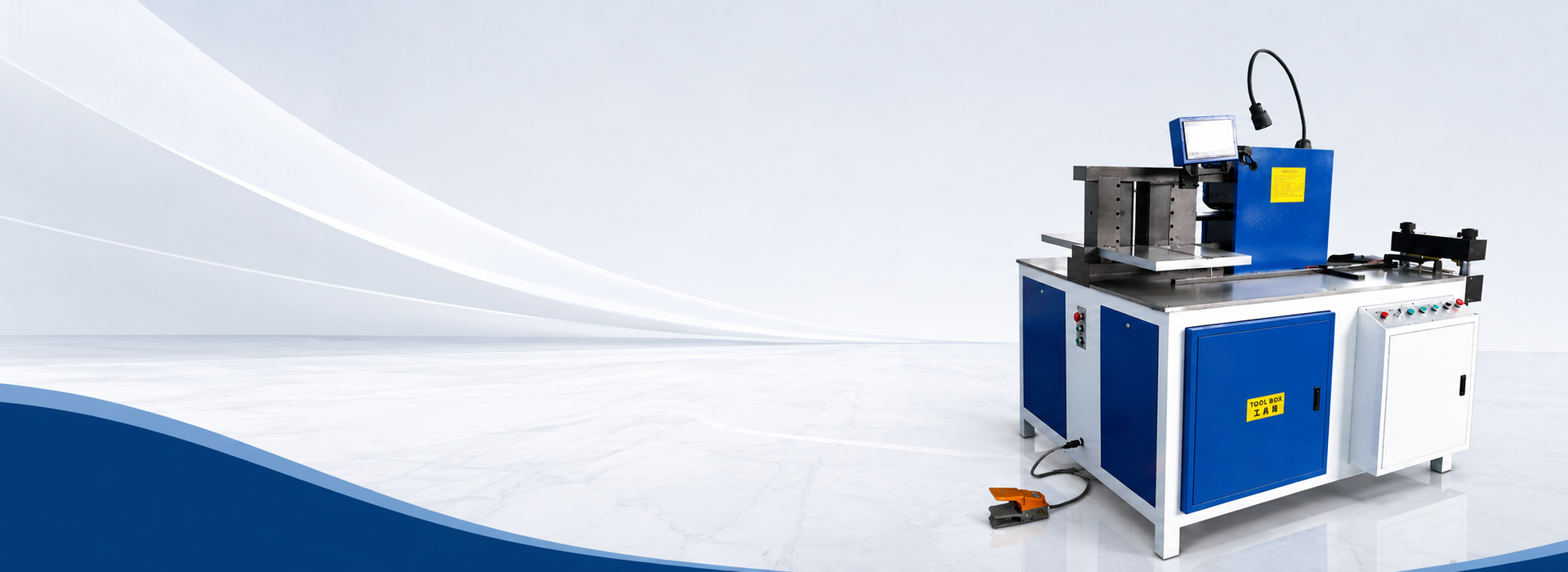
Choose the Right Busbar Processing Configuration
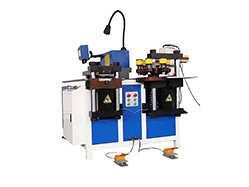
Hydraulic, CNC and 3-in-1 describe different machine attributes. Hydraulic refers to how processing force is generated, CNC refers to the programmed control of defined positioning or processing variables, and 3-in-1 refers to the integration of punching, shearing and bending stations. One machine may combine these characteristics.
A basic hydraulic 3-in-1 machine may suit mixed, lower-volume production where operators position and measure workpieces manually. A CNC- or servo-positioning 3-in-1 machine becomes more relevant when hole coordinates, cutting lengths or bending positions recur across multiple orders. Separate CNC punching, shearing and bending machines may be more suitable when operations must run in parallel or higher production output is required.
Busbar Processing Machine Configurations
FengHua busbar processing machines are available in hydraulic, servo-positioning, CNC and dedicated configurations. Compare each configuration by operation-specific capacity, positioning range, controlled variables, tooling, workpiece handling and representative sample results.
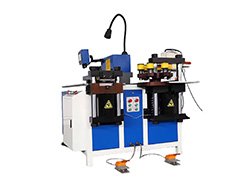
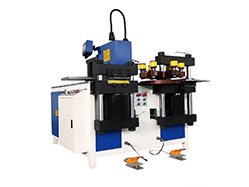
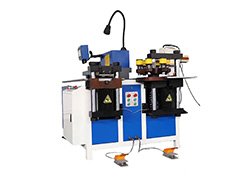
A basic hydraulic 3-in-1 machine combines punching, shearing and bending stations with measurement and positioning, and operator involvement depending on the model. It may suit mixed, lower-volume production and workshops that need several processing functions within a limited area. Confirm the capacity of each station separately.
A CNC- or servo-positioning 3-in-1 machine can control selected workpiece positions or processing parameters, depending on the model. Confirm which axes are controlled, which values are only displayed, the program-storage capacity, positioning range, and changeover procedure. The term CNC alone does not prove that all three stations are automatically positioned.
A dedicated CNC punching and shearing machine is intended for repeated hole patterns and fixed-length cutting. Compare feeding travel, positioning method, hole and slot capacity, minimum finished length, gripper dead zone, remnant handling, tool-change time and measured conforming output. A separate bending process is normally required.
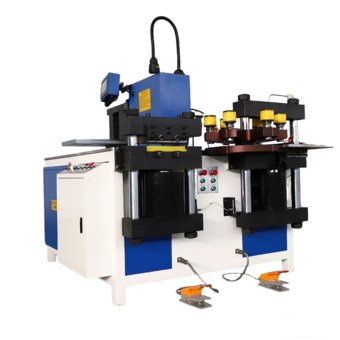
A dedicated CNC bending machine may suit production where bending is the main bottleneck or where parts contain recurring bend positions and structures. Confirm flat- and vertical-bending capacity, supported bend types, controlled variables, tooling clearance, angle-correction method and the measurement procedure used during FAT.
Choose a Busbar Processing Machine by Production Requirement
| Production Requirement | Recommended Configuration | Why |
|---|---|---|
| Mixed orders and limited workshop space | Basic hydraulic 3-in-1 machine | Combines punching, shearing and bending in one machine with lower layout complexity |
| Repeated hole positions or cutting lengths | Servo-positioning 3-in-1 machine | Reduces repeated manual positioning for recurring coordinates |
| Repeated punching and shearing with higher output | Dedicated CNC punching and shearing machine | Supports continuous positioning and dedicated processing without waiting for bending |
| Bending is the main production bottleneck | Dedicated CNC bending machine | Better suited to recurring bend positions, angles and forming structures |
| Multiple operations must run at the same time | Separate punching, shearing and bending machines | Allows parallel production across different workstations |
Use this table to narrow down the machine type, then send your representative drawings and production requirements for model confirmation. FengHua can review operation-specific capacity, positioning, tooling, processing sequence and FAT requirements before quotation.
What to Compare Before Buying a Busbar Processing Machine

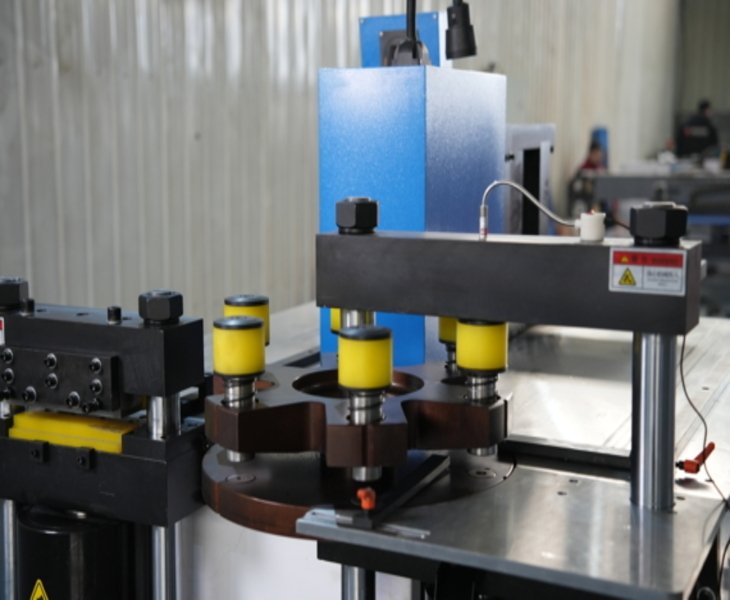
Confirm punching, shearing, flat-bending and vertical-bending capacity separately. A machine’s maximum width and thickness for one operation should not be applied automatically to the other stations.

Confirm which axes are automatically positioned, the effective positioning travel, program-storage and revision functions, parameter-backup method and whether operators must still mark or align the busbar manually.

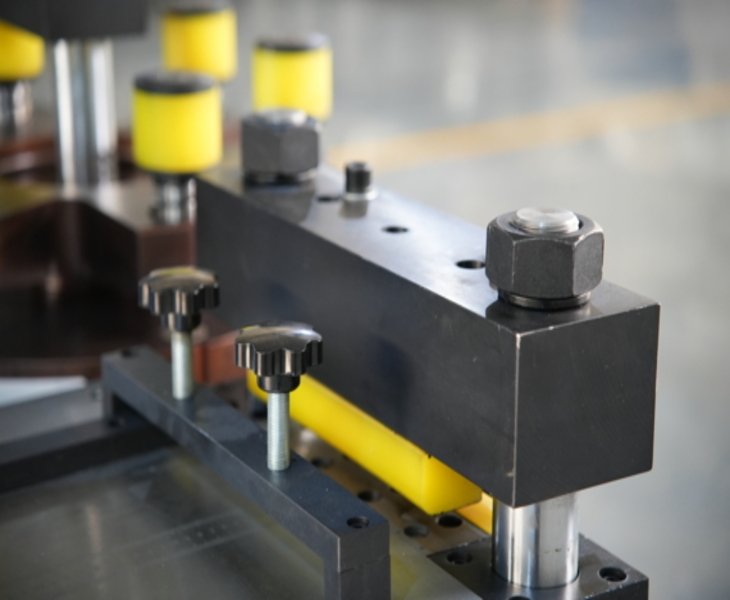
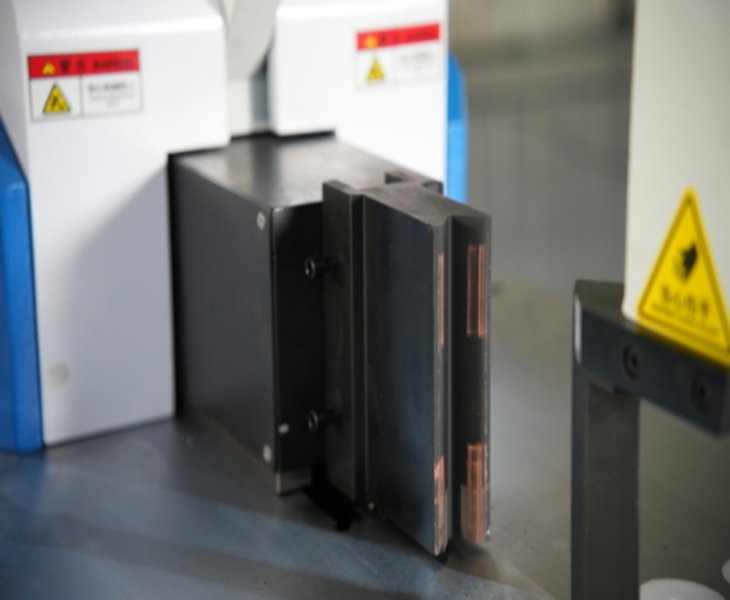
Compare the included shear blades, optional tooling, minimum hole-to-edge distance, usable remnant length, and tooling replacement cost. Material utilization should be evaluated using representative drawings rather than general claims.

Measure complete cycle time from material loading to the conforming finished part. For mixed production, also measure the time from the final conforming part of one model to the first conforming part of the next model.
Compare FengHua Busbar Processing Machine Models
| Model | Configuration | Key Capacity | Best For |
|---|---|---|---|
| GJBM303 | Hydraulic 3-in-1 | Punching: Dia. 4.3–34 mm, 350 kN; Shearing/Bending: 350 kN | Mixed 3-in-1 processing |
| 303 Servo Positioning | Servo 3-in-1, 1,000 mm travel | Up to 160 × 15 mm; Vertical bend: 80 × 8 mm | Repeated-position production |
| BSSK-503 | CNC servo 3-in-1 | Shearing: 250 × 20 mm; Flat bend: 250 × 16 mm; Vertical bend: 100 × 10 mm | Switchgear production |
Capacities vary by operation, material and tooling. Confirm drawings and operation-specific limits before ordering.
Maintenance and Documentation
Before ordering, confirm the brands and specifications of the main hydraulic, electrical and control components. The spare-parts list should identify consumables, wear parts, part numbers, recommended first-year spare-parts stock and expected replenishment lead times.
Equipment delivery documentation should include an operation and safety manual, electrical diagrams, hydraulic schematics, parameter backups, a list of main components, and maintenance instructions. For overseas projects, you should confirm in advance the technical support channels, response procedures, and methods for providing subsequent spare parts and updated documentation.
Information Required for Machine Selection
| Requirement | Information to Provide |
| Material | Copper or aluminum grade and temper |
| Busbar Size | Common and maximum width, thickness and raw-bar length |
| Punching | Hole diameter, slots, spacing and edge distance |
| Shearing | Finished length, squareness and cut-face requirements |
| Bending | Flat, vertical, Z-, U-, offset or special bends |
| Tolerances | Hole position and dimensions |
| Output | Batch size and required conforming output per shift |
| Drawings | One common, one maximum-size and one complex drawing, with drawing number and revision |
| Power Supply | Voltage, frequency and phase |
| Tooling | Standard and customized tooling requirements |
Send these requirements with representative drawings. FengHua can review the proposed model, capacity of each processing station, tooling, processing sequence, interference risks and FAT requirements before preparing a technical proposal.
How to Verify a Busbar Processing Machine Before Shipment
| Check | What to Verify | Evidence |
|---|---|---|
| Sample Processing | Punching, shearing and bending using representative drawings | Finished busbar samples |
| Dimensions | Hole position, finished length, bend angle and final dimensions | Measurement records |
| Machine Functions | Agreed positioning, control and processing functions | FAT checklist |
| Tooling | Standard and customized dies, blades and bending tools | Tooling list and test |
| Components | PLC, HMI, hydraulic and electrical components | Approved configuration sheet |
| Safety | Emergency stops, guards, interlocks and overload protection | FAT inspection record |
| Documentation | Manuals, electrical drawings, hydraulic schematics and backups | Delivery document list |
FAT should be based on the approved machine configuration, representative drawings and agreed acceptance criteria.
Price depends on operation-specific capacity, nominal force, functions, tooling package, hydraulic and electrical components, safety configuration, and service scope. Compare quotations using the same drawings and technical requirements sheet.
Service life depends on the busbar material and temper, thickness, cutting frequency, blade clearance, alignment, lubrication and maintenance. Inspect shear blades according to measured wear, burr height, cut-face quality and finished-part results rather than using a fixed replacement interval.
A 3-in-1 machine may suit mixed production, moderate output and limited workshop space. Separate CNC punching, shearing and bending machine operations must run in parallel, or recurring orders require higher output. Compare staffing, complete cycle time, changeover, and floor space.
Confirm voltage, frequency, phase, grounding, allowable voltage variation, ambient temperature, humidity, dust conditions, floor loading and hydraulic-oil requirements. The workshop layout should also provide sufficient infeed, outfeed, operator and maintenance space.
Confirm the English operating and safety manuals, electrical diagrams, hydraulic schematics, component list, tooling specifications, parameter backups, maintenance schedule, spare-parts list, FAT report and applicable compliance documents.