
Quick Answer: How Should You Select a Busbar Cutting Machine?
Select a busbar cutting machine according to the material grade or alloy, temper, width × thickness, raw-bar length, required finished length, cutting quantity, cut-surface requirement, positioning method, material support and FAT criteria.
Do not select a machine only by cutting force or an overall catalogue maximum. Confirm the cutting capacity, blade, finished-length inspection and material-handling method for the exact proposed model.
Your Professional Busbar Cutting Machine Manufacturer
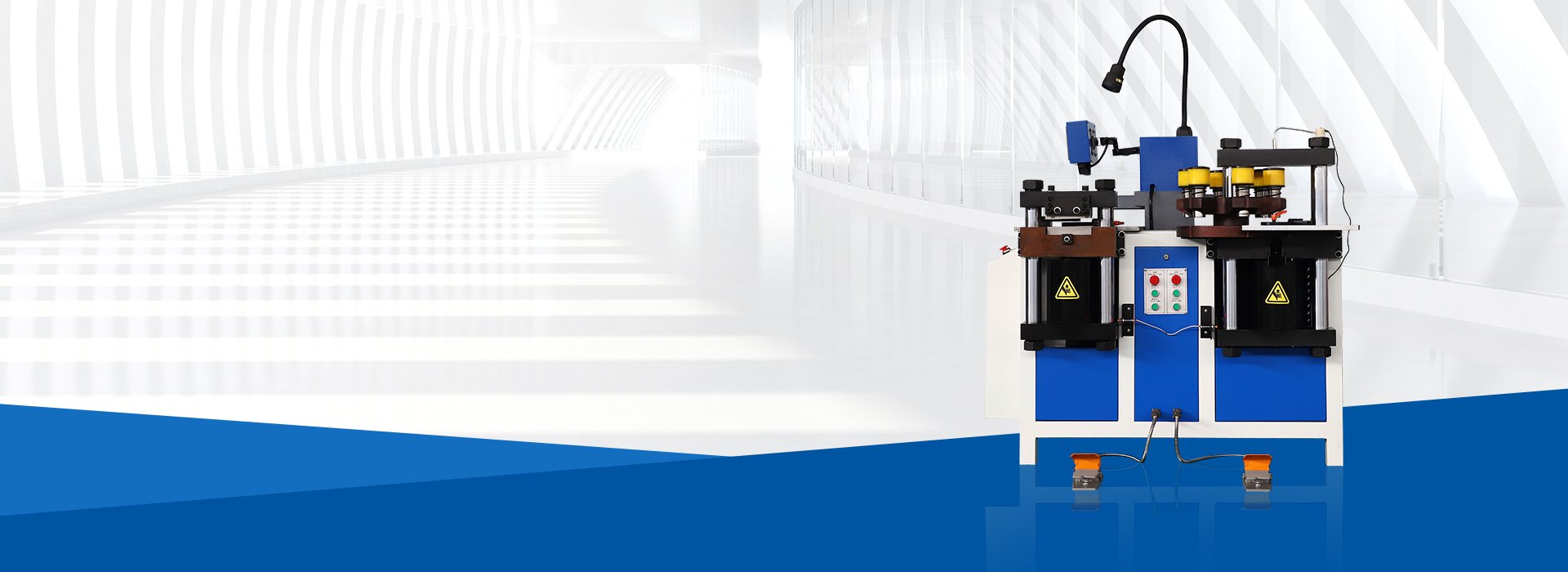
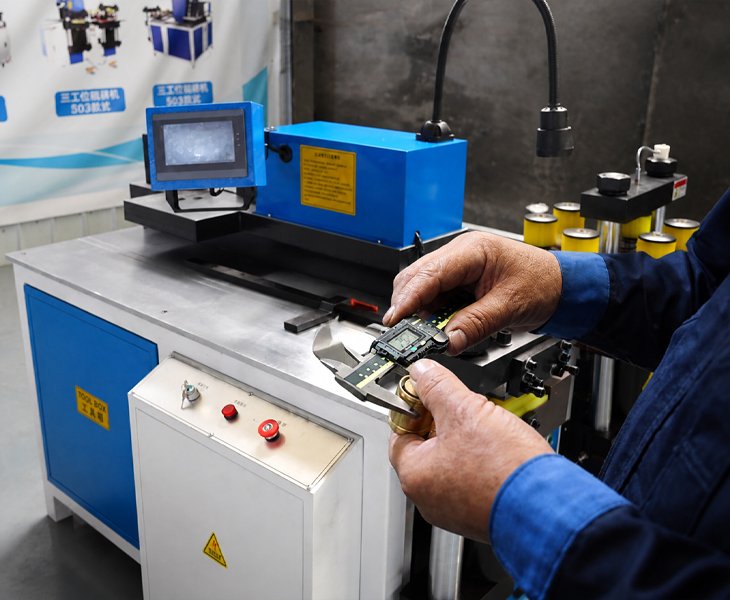
FengHua configures busbar cutting equipment according to the required finished length, material and production process rather than only the nominal cutting force.
Before quotation, the engineering review should confirm the copper or aluminum grade, temper, regular and maximum width × thickness, raw-bar length, required finished lengths, batch mix, cut-surface requirement, burr limit, material-support method and positioning requirement.
The technical quotation should identify the exact model, cutting-station capacity, blade configuration, positioning method, material-loading method, included supports, electrical configuration, FAT samples, documentation, warranty and recommended spare parts.
Busbar Cutting Machine Product Solutions
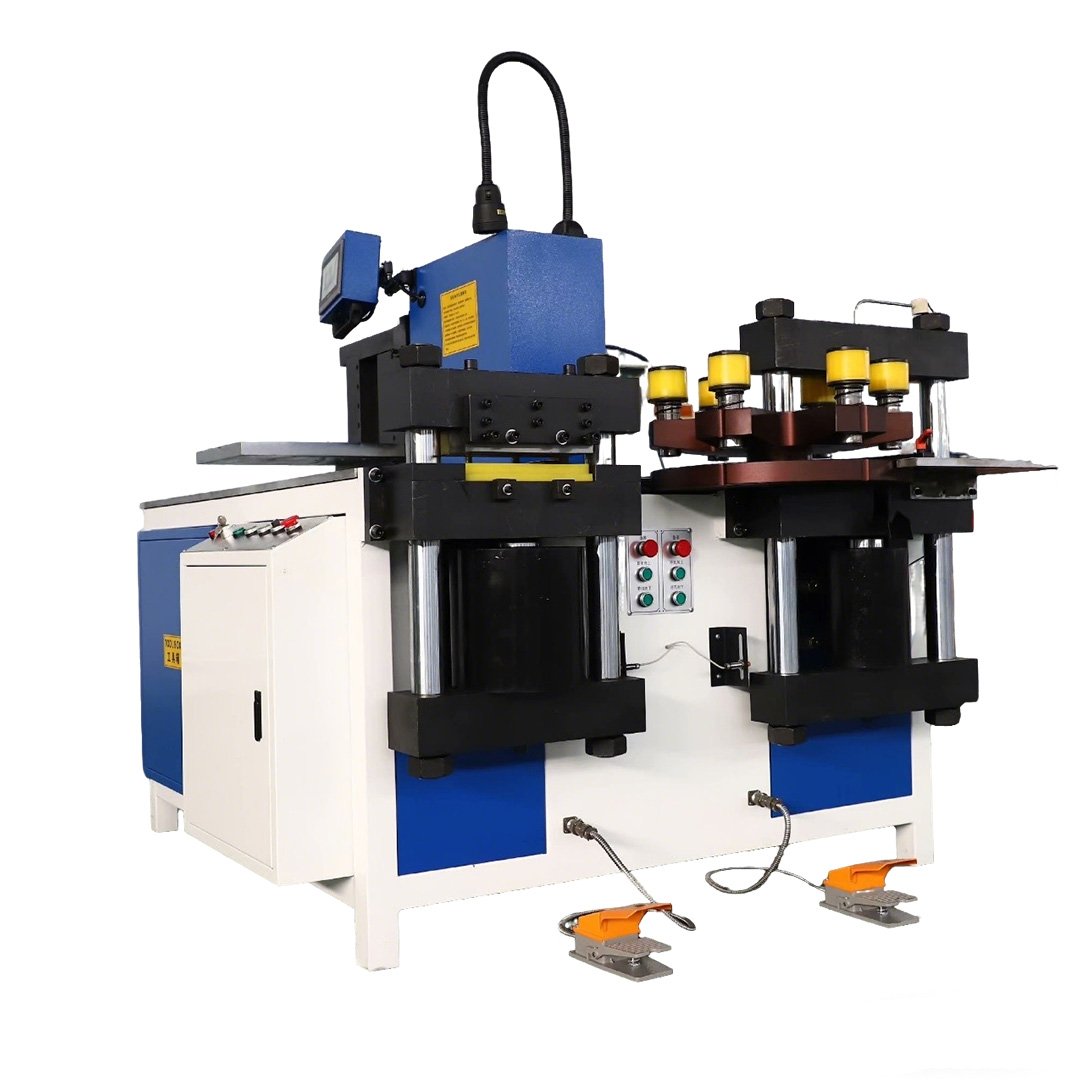
An integrated cutting, punching and bending configuration with an overall source-sheet processing reference of 160 × 16 mm and 350 kN cutting force.
A medium-capacity integrated configuration with cutting, punching and bending functions, an overall source-sheet reference of 260 × 16 mm and 500 kN cutting force.
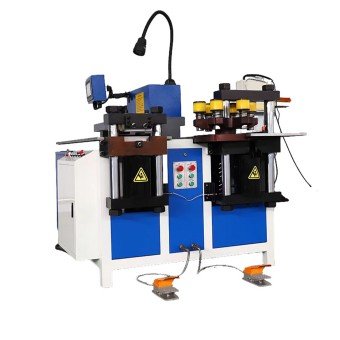
The highest-capacity model in the uploaded GJBM series, with an overall source-sheet reference of 300 × 20 mm and 800 kN cutting force.
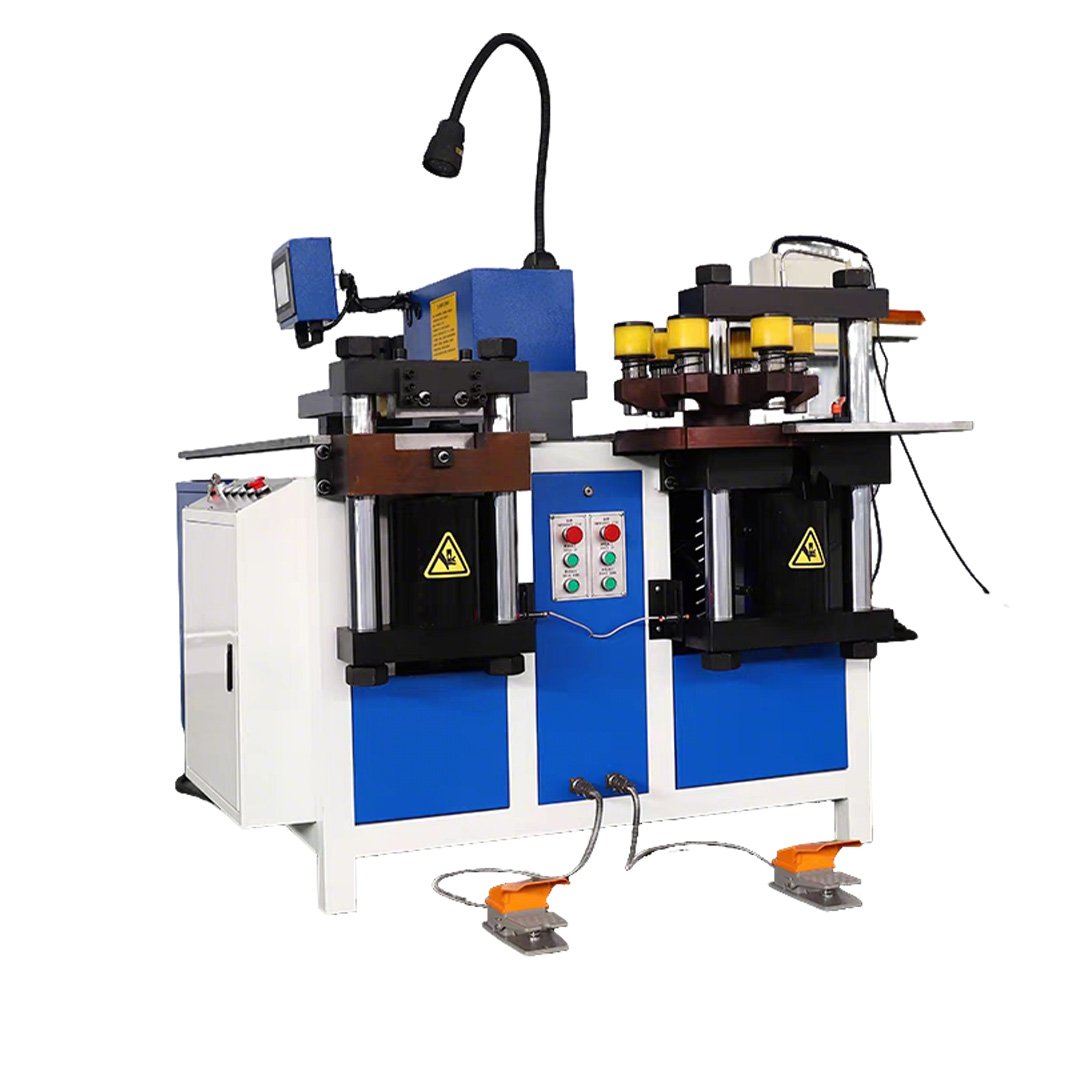
For projects requiring specific finished lengths, servo positioning, long-bar supports, customized blades, alternative electrical standards or line integration. Final capacity and functions are confirmed through drawing review and FAT.
Which GJBM Busbar Machine Should You Choose?
| Production Requirement | Starting Model | Main Check |
|---|---|---|
| Overall size within 160 × 16 mm | GJBM303 | Cutting-station capacity and blade |
| Overall size up to 260 × 16 mm | GJBM503 | Material condition and cut quality |
| Overall size up to 300 × 20 mm | GJBM803 | Maximum-size sample and handling |
| Special length or positioning | Custom configuration | Support, positioning and FAT |
The dimensions above are overall model-level references. Confirm the maximum cutting width and thickness separately for the approved cutting station.
GJBM Series Integrated Cutting References
| Model | Overall W × T | Cutting Force | Motor | Weight |
|---|---|---|---|---|
| GJBM303 | 160 × 16 mm | 350 kN | 3 × 4 kW | 1,300 kg |
| GJBM503 | 260 × 16 mm | 500 kN | 3 × 5.5 kW | 1,800 kg |
| GJBM803 | 300 × 20 mm | 800 kN | 3 × 7.5 kW | 2,300 kg |
These GJBM models combine cutting, punching and bending. The published width and thickness values are overall source-sheet references and should not be presented as unconditional cutting-station capacities.
Confirm the material grade or alloy, temper, maximum cutting width, maximum cutting thickness, blade configuration, required finished length and cut-surface acceptance for every project.
What Should You Confirm in a Busbar Cutting Machine?

Confirm the maximum cutting width and thickness separately from the machine’s overall processing range. Also confirm the applicable copper or aluminum grade and temper.

Confirm the blade material, upper and lower blade structure, clearance adjustment, replacement method, sharpening requirements and spare-blade availability.

Confirm how the raw bar is measured and positioned, the effective length range, datum, roller support, maximum overhang and handling method for long or heavy materials.

Confirm finished length, cut-face condition, burrs, deformation, squareness, surface marks and the inspection method used during FAT.
Tailored Busbar Cutting Machine Solutions
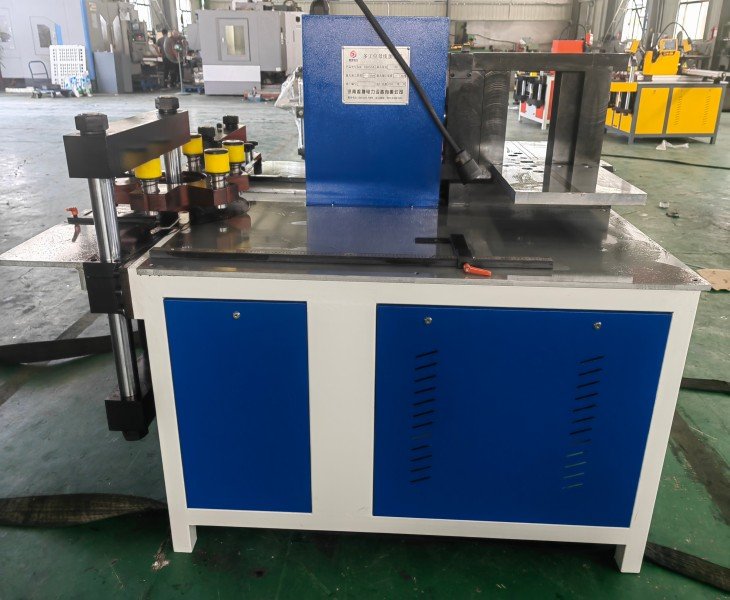
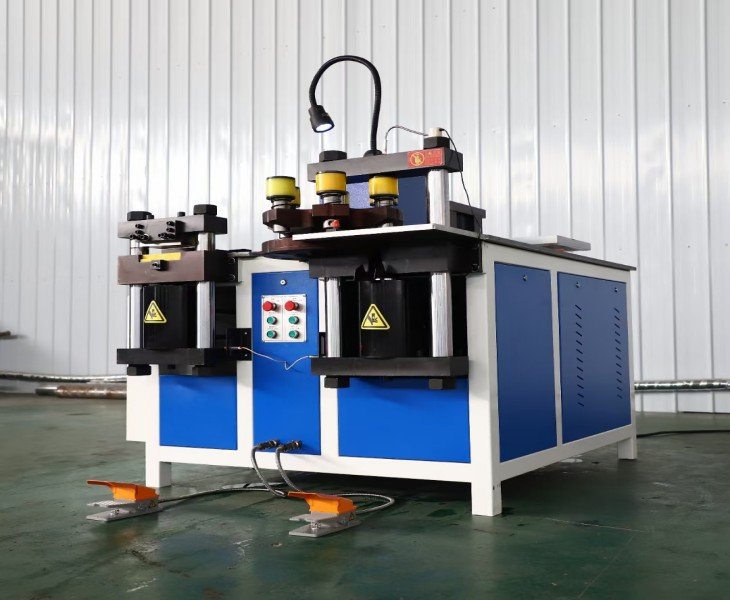
A customized busbar cutting solution should begin with the material list and finished-length drawings.
FengHua reviews the material grade or alloy, temper, width × thickness, raw bar length, required finished lengths, batch mix, cutting quantity, surface requirements, positioning method, material support, and workshop layout.
The approved quotation should identify the machine model, cutting capacity, blade, positioning system, supports, loading method, safety functions, FAT samples, inspection criteria and spare parts.
How Should Busbar Cutting Length Be Verified?
Positioning accuracy and finished cutting-length accuracy should not be treated as the same value.
The positioning system controls where the raw bar is placed before cutting. The finished length can also be affected by the blade, material movement, clamping, support, cut deformation and measurement method.
During FAT, identify the drawing datum and record the required length, measured finished length, cut-face condition and results from multiple consecutive parts.
| Check | What to Measure |
|---|---|
| Length | Required and measured finished length |
| Cut Face | Squareness and deformation |
| Edge | Burrs and surface marks |
| Repeatability | Multiple consecutive parts |
How Should Busbar Cutting Output Be Compared?
Do not compare machines using one cutting stroke or hydraulic speed alone.
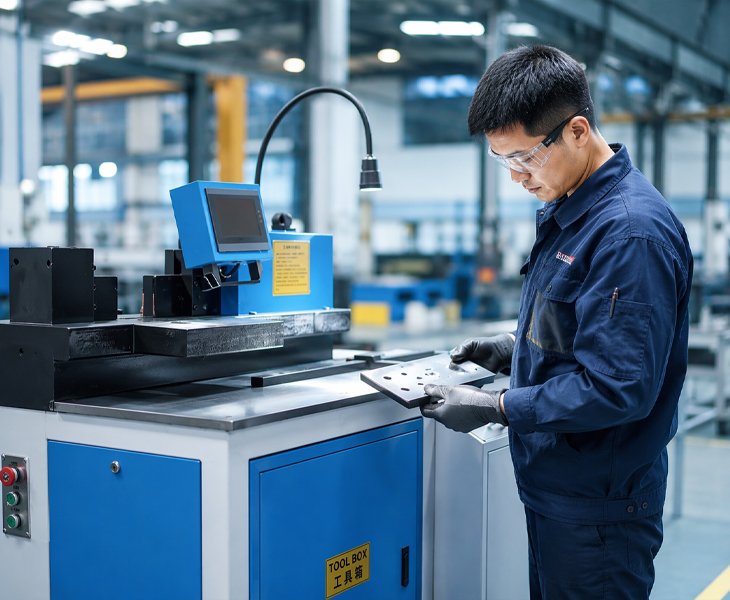
Complete cycle time should include material loading, measurement or program selection, positioning, clamping, cutting, unloading, stacking and inspection.
For a fair supplier comparison, process the same material and finished length. Record the number of operators, setup time, complete cycle time, accepted parts, rejected parts and any manual repositioning.
How to Compare China’s Top Busbar Cutting Machine Manufacturers
There is no single official ranking that certifies the ten best busbar cutting machine manufacturers in China.
A Top 10 list should be used as a supplier-research starting point rather than proof of cutting capacity, finished-length accuracy or service quality.
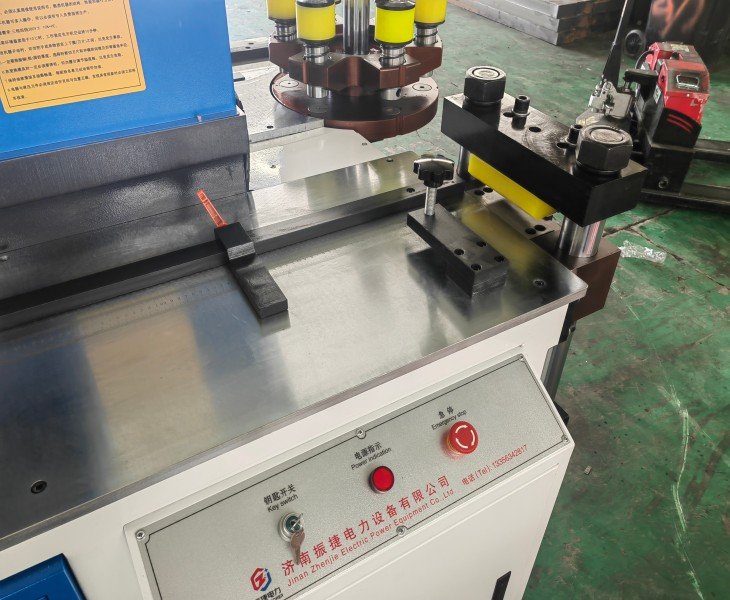
Compare the exact proposed model, cutting-station capacity, blade and clearance system, positioning method, long-bar support, sample results, FAT records, documentation, warranty and spare-parts scope.
| Supplier Check | Evidence |
|---|---|
| Exact Model | Nameplate and configuration |
| Cutting Capacity | Material, width and thickness |
| Positioning | Range and controlled functions |
| Testing | Samples and FAT results |
| Support | Documents, blades and spare parts |
How to Achieve Multi-Specification and Highly Complex Busbar Machining
Fenghua CNC busbar cutting machines can process busbars of various sizes without complex machine adjustments.
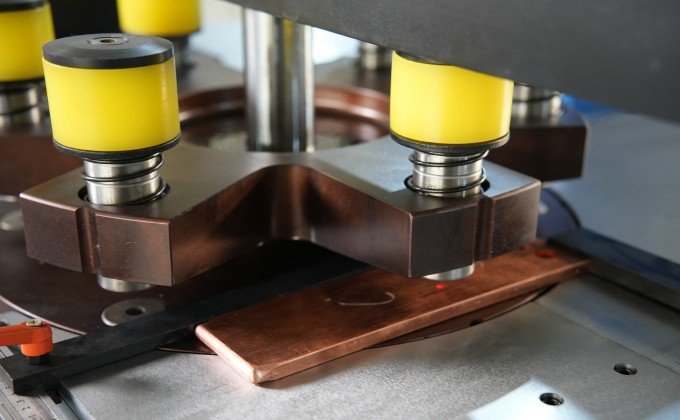
Different copper and aluminum grades, tempers, widths and thicknesses can require different cutting-force margins, blade clearances, material supports and handling procedures.
The maximum machine force does not prove that every material can be cut with the same blade setting or finished-surface result.
Confirm each regular and maximum specification using representative material before approving the machine configuration.
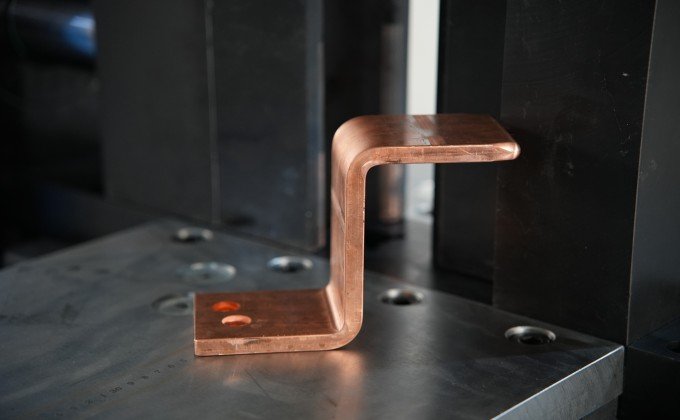
A digital interface may allow operators to enter finished lengths or recall stored settings. This does not automatically mean that material loading, alignment, clamping, feeding, cutting and unloading are fully automatic.
Confirm the controlled axis, positioning range, program storage functions, correction method, user permissions, safety limits, and remaining manual operations for the exact proposed machine.
It cuts copper or aluminum busbars to the finished lengths required for switchgear, electrical panels, transformers, busduct systems and other electrical equipment.
The uploaded GJBM source sheet lists cutting as one of the three machine functions. Final compatibility must be confirmed according to the material grade or alloy, temper, width, thickness, blade and required cut quality.
Not automatically. The uploaded values are overall model-level processing references. The maximum cutting width and thickness should be confirmed separately for the cutting station.
No. Servo positioning accuracy describes movement of the positioning system. Finished-length accuracy must be measured after cutting and can also be affected by clamping, blades, material movement and support.
It can be configured as a standalone machine, integrated station or part of a production workflow, depending on the approved interfaces, positioning method and material-handling system.
Provide the material grade or alloy, temper, width × thickness, raw-bar length, required finished lengths, batch quantities, cut-surface requirements, local voltage, preferred positioning method and drawings.