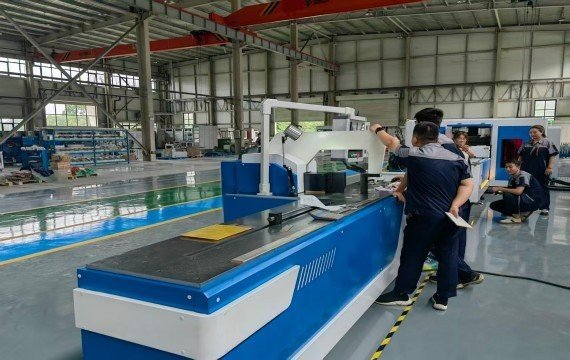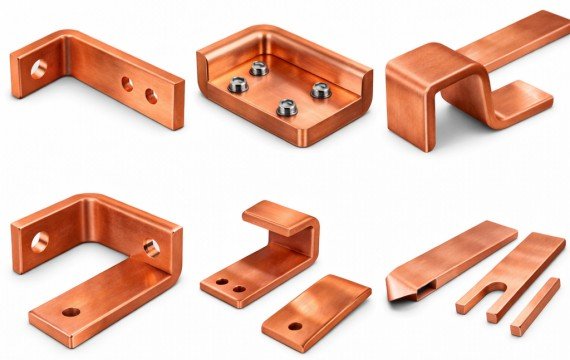
Copper and aluminum busbars are essential conductive components used in electrical cabinets, switchgear, and power distribution systems.A complete busbar fabrication process includes drawing confirmation, material preparation, cutting, punching, bending, deburring, and inspection.Each processing step directly affects installation accuracy, electrical connection quality, and production efficiency. As a busbar machine manufacturer in China, Fenghua provides hydraulic, 3-in-1, CNC, and automatic busbar processing machine solutions to help factories reduce manual adjustment and shorten production time.
Quick Answer
A busbar machine is industrial equipment used to process copper or aluminum busbars for electrical cabinets, switchgear, and power distribution equipment. Depending on the machine, it can complete busbar cutting, punching, bending, embossing, notching, and chamfering workflow.These consistent dimensions, accurate hole positions, stable bending angles, and measurements.
What Is a Busbar?
Before understanding how a busbar machine works, you need to understand what a busbar is and why it is used in electrical manufacturing.
What Does a Busbar Do?
A busbar is a conductive metal bar used to distribute electrical power inside electrical equipment.Compared with traditional cable wiring methods, busbars provide lower resistance, stable current transmission, and a cleaner internal cabinet layout. Copper busbars are widely used because they provide reliable mechanical strength for industrial applications.
Why Copper and Aluminum Busbars Are Common
The two most busbar manufacturing conductivity, production cost. Copper busbars are generally selected for applications requiring high conductivity and stable long-term electrical performance.Aluminum busbars are often selected when equipment weight and material cost need to be controlled. Selecting the correct material is also an important factor in the busbar processing machine.
What Is a Busbar Machine?
A Busbar Machine is used to cut copper and aluminum busbars into finished conductive components for electrical equipment.Instead of performing manually, a busbar machine integrates multiple machining processes into one efficient production workflow.The equipment is used by electrical cabinet manufacturers and power distribution equipment factories.
What Materials Can a Busbar Machine Process?
Modern busbar machines use different conductive materials, including copper and aluminum.The machine configuration, tooling, and processing force should match the width, and a correct machine reduces tooling wear and unnecessary production costs.
Can It Perform?
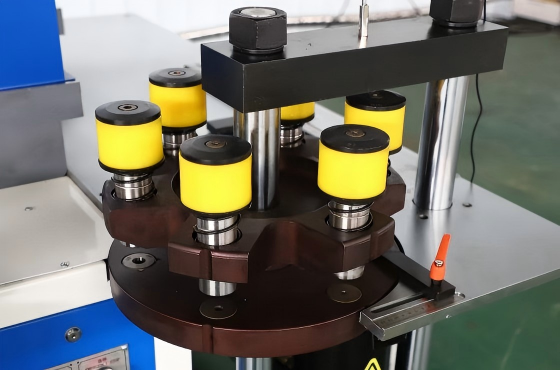
A busbar machine can perform busbar cutting, busbar punching, busbar bending, and additional processes, such as notching and chamfering. These machining operations prepare busbars for installation inside electrical cabinets and switchgear systems.Integrated processing improves production efficiency, reduces repeated handling, and supports batch processing.
A Busbar Machine Work?
A busbar machine transforms raw copper or aluminum busbars into finished conductive components, using a machining process including feeding, positioning, clamping, cutting, punching, bending, deburring, and unloading. These stages affect the final installation accuracy, electrical connection quality, and production efficiency.
Material Feeding and Positioning
The production process begins with accurate material feeding and positioning before machining starts.A stable feeding system ensures the copper busbar enters the machining area smoothly without shifting.Accurate material feeding for machining starts. A stable feeding system ensures the copper busbar enters the machining area smoothly without shifting.
Cutting, Punching and Bending Process
Once the material is positioned, the busbar machine performs different machining operations.The busbar cutting unit controls the length of every copper busbar.The busbar cutting unit determines the finished length of the busbar. Consistent cutting improves cabinet assembly accuracy correction. A professional cutting unit can also reduce burrs, punching, and bending.
Inspection and Finished Busbar Output
Busbar should pass dimensional and appearance inspection before installation. The inspection process verifies cutting length, hole position, bending angle, and surface condition. Proper inspection reduces adjustments and improves the electrical system.
Key Working Units of a Busbar Machine
A modern busbar processing machine combines multiple working units for machining. Understanding each unit helps you select the right equipment for your factory.
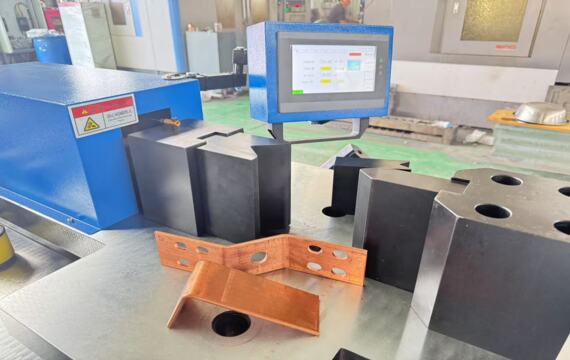
Busbar Cutting Unit
A modern busbar machine and efficient machining. A machine for your production.The busbar cutting unit determines the finished length of the busbar. Consistent cutting improves cabinet assembly accuracy and adjustment. Professional cutting units reduce burrs and improve machining quality.
Busbar Punching and Bending Units
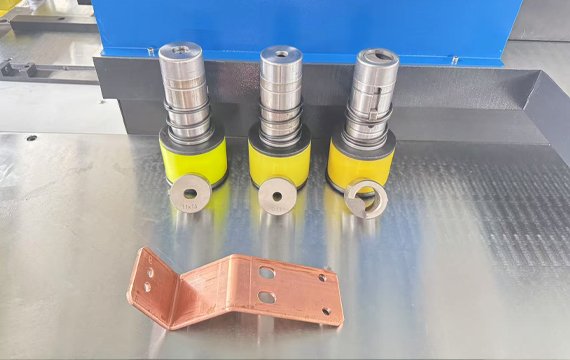
The punching unit creates installation holes according to production drawings.Accurate hole positioning improves connection quality and reduces assembly problems.The bending unit controls the final forming angle of copper busbars.Stable bending performance helps manufacturers produce busbars that fit correctly inside compact electrical cabinets.
Hydraulic System, CNC Control and Tooling
The hydraulic system provides sufficient processing force for thick copper and aluminum busbars. The CNC positioning, processing sequence, and machining parameters.Professional tooling determines machining precision. Proper tooling configuration allows you to process different busbar sizes.
Types of Busbar Machines
Different types of busbar machines are suitable for processing. Selecting the correct machine controls investment costs.
Manual Busbar Machine
Manual machines are suitable for occasional production and maintenance work. Processing quality depends on the operator’s experience. Manual production becomes inefficient as it increases.
Hydraulic Busbar Machine
A hydraulic busbar machine provides strong processing force for copper and aluminum busbars. It is suitable for medium-volume production. Investment cost and processing.
CNC Busbar Processing Machine
A CNC busbar machine uses digital control to improve machining accuracy. Processing parameters for different production orders. It is widely used by switchgear manufacturers, electrical cabinet manufacturers, and OEM factories requiring stable batch production.uses digital control to improve machining accuracy. Processing parameters can be stored and reused for different production orders. It is widely used by switchgear manufacturers, electrical cabinet manufacturers, and OEM factories requiring stable batch production.
3-in-1 Busbar Machine
A 3-in-1 busbar machine integrates cutting, punching and bending functions into one machine. It is suitable for electrical cabinet manufacturers that need complete busbar processing capability in a compact workshop layout. Compared with separate machines, a 3-in-1 solution reduces material handling and helps operators complete different processing steps more efficiently.
Automatic Busbar Processing Line
An automatic busbar processing line is suitable for large factories that need high-volume and standardized production. It handling, improve production planning and processing for power distribution equipment manufacturers.
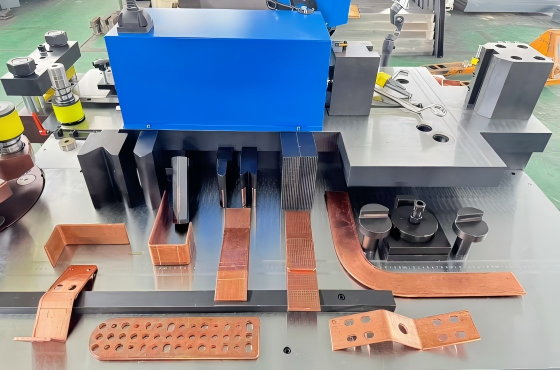
Why Processing
Electrical cabinet and switchgear production: small machining errors and problems. Incorrect cutting length may prevent the busbar from fitting into the cabinet. Hole deviation may stop bolts or terminals from aligning correctly. Inaccurate bending angles may cause interference with breakers, insulation supports, or cabinet structures. Stable machining accuracy is an advantage of a professional busbar machine.
Cutting Accuracy
Incorrect cutting length may prevent the busbar from fitting inside the electrical cabinet. Cutting corrections increase production time. Professional busbar cutting machines improve dimensional of batch production.
Punching Accuracy and Electrical Connection
Hole position accuracy affects bolt installation and electrical connection reliability. Hole deviation often causes assembly adjustment and production delays.
A CNC busbar punching machine improves hole accuracy for different cabinet models.
Bending Accuracy and Installation Safety
Accurate bending helps busbars fit correctly inside compact electrical cabinets. Incorrect bending angles may interfere with breakers, terminals, insulation parts, or cabinet structures. A CNC busbar bending machine improves bending and reduces adjustments.
Busbar Machine Selection Guide
Choosing the right busbar machine depends on your production volume, busbar specifications, factory layout, and plans. The correct machine configuration reduces long-term operating costs.
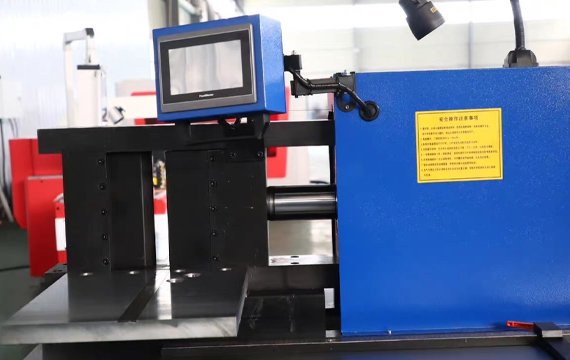
Processing Capacity
Your busbar thickness, busbar width, and daily production require processing. Machines with insufficient capacity may slow production and increase equipment wear. Selecting a range helps your factory handle different projects.
Automation Level
Different factories require different levels of automation. Small workshops often choose hydraulic busbar machines for flexible production. Growing factories usually upgrade to 3-in-1 busbar processing machines or CNC busbar processing machines for better repeatability, faster changeover and higher production efficiency. Large factories may require an automatic busbar processing line to achieve higher output and more stable batch production.
Tooling Configuration and Future Expansion
Tooling configuration determines your busbar machine. Factories producing different busbar sizes should choose machines with interchangeable tooling systems. This helps avoid equipment replacement. A scalable machine configuration provides greater long-term value for switchgear factories.
Busbar Machine Selection Table
Different production requirements require different busbar machines. The following table factory.
| Factory Requirement | Recommended Machine | Suitable Customer | Main Benefit |
| Flexible low-volume production | Hydraulic Busbar Machine | Small electrical workshops | Lower investment and flexible operation |
| Cutting, punching and bending in one machine | 3-in-1 Busbar Machine | Electrical cabinet manufacturers | Compact layout and complete processing |
| Higher machining accuracy and repeatability | CNC Busbar Processing Machine | Switchgear manufacturers & OEM factories | Better consistency |
| High-volume automated production | Automatic Busbar Processing Line | Large power equipment manufacturers | Higher output and less manual handling |
Not sure which busbar machine fits your production? Send your busbar drawings, material, thickness, width, hole layout, bending angle, daily production quantity, factory voltage and destination country. Fenghua will recommend a suitable machine configuration.
Common Copper Busbar Processing Issues
Many production problems are caused by unstable manual processing.Professional busbar machines help you improve machining and reduce production risks.
| Processing Problem | Common Cause | Busbar Machine Solution |
| Wrong cutting length | Manual measuring error | Busbar Cutting Unit improves length consistency |
| Hole position deviation | Manual marking or drilling error | Busbar Punching Machine improves hole repeatability |
| Inaccurate bending angle | Operator experience varies | CNC Busbar Bending Machine stores bending parameters |
| Slow model changeover | Different cabinet models | CNC control enables faster parameter adjustment |
| High rework rate | Unstable manual processing | Integrated Busbar Processing Machine improves workflow stability |
What Information Should You Send Before Buying a Busbar Machine?
Providing complete production information helps the manufacturer recommend a suitable busbar machine and prepare an accurate quotation.Comprehensive technical data facilitates equipment selection and the confirmation of the proposed solution.
Essential Technical Parameters
Before requesting a quotation, you should prepare the basic production information for your busbars. Determine machine capacity, tooling configuration, and production solutions.
| Information | Why |
| Copper or aluminum material | Determines tooling and processing force |
| Busbar thickness | Determines machine capacity |
| Busbar width | Determines working range |
| Maximum busbar length | Determines feeding and positioning design |
| Hole size and hole drawings | Determines punching die configuration |
| Bending angle and direction | Determines bending tooling |
| Daily production quantity | Helps recommend hydraulic, CNC or automatic equipment |
| Factory voltage | Important for export machine configuration |
| Factory layout | Helps confirm machine size and workflow |
| Required automation level | Helps choose manual, CNC or automatic solution |
| Destination country | Helps confirm voltage, packing, documents and after-sales support |
Providing engineering drawings together with Fenghua’s engineering team to recommend a suitable busbar machine configuration.
Why Engineering Drawings Are Important
Engineering drawings contain the complete machining requirements for copper or aluminum busbars.Drawings help determine cutting length, punching layout, bending sequence, and tooling configuration.Providing drawings reduces communication time and improves quotation accuracy.
What Overseas Buyers Should Check Before Choosing a Busbar Machine Manufacturer?
For overseas buyers, machine selection is not only about price and processing capacity. You should also confirm factory voltage, machine documentation, operation training, packing method, inspection videos, and after-sales support. A professional busbar machine manufacturer should be able to recommend a suitable machine based on your drawings, material size and production volume.
Frequently Asked Questions
What is the best machine for making copper busbars?
The best machine depends on your busbar material, thickness, width, hole layout, bending requirements, and daily production volume. Small workshops often choose hydraulic busbar machines, electrical cabinet 3-in-1 machines, and OEM or switchgear factories may choose CNC or automatic busbar processing solutions.
Can one busbar machine cut, punch and bend copper busbars?
A 3-in-1 busbar machine combines cutting, punching, and bending functions in one machine. It improves material production efficiency for factories requiring multiple processing steps.
How do I choose between a 3-in-1 busbar machine and separate cutting, punching?
A 3-in-1 busbar machine is suitable for many small and medium factories that need complete processing capability.Separate machines for factories requiring higher production capacity and dedicated processing stations.
What copper thickness can a busbar machine process?
The processing thickness depends on the machine model, hydraulic pressure, tooling design, and production requirements.Manufacturers should select equipment according to actual copper busbar dimensions.
What information should I provide before requesting a quotation?
You should provide material type, busbar parameters, daily production quantity, factory voltage, and destination country.
Final Thoughts
A professional busbar machine helps electrical manufacturers improve machining accuracy.The correct machine configuration allows factories to produce copper busbar and reduce unnecessary manual adjustments.Send your production information to Fenghua’s, and our engineering team will recommend a suitable busbar processing solution based on your factory requirements.