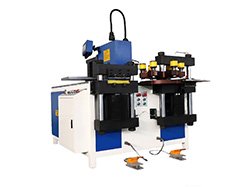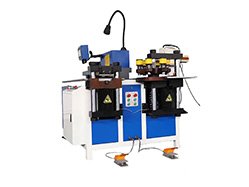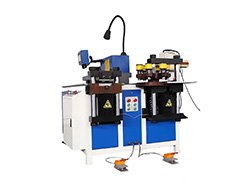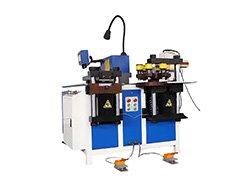
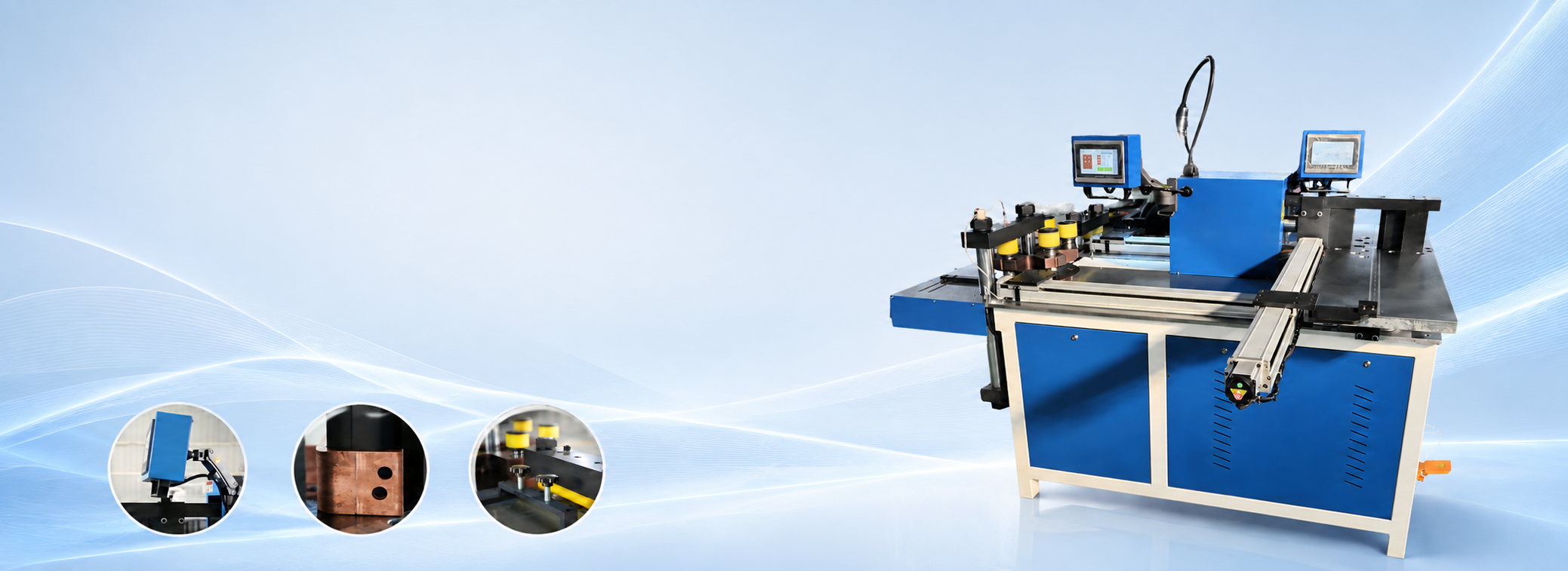
Choosing the Right CNC Busbar Processing Machine
CNC busbar processing machines can be configured for punching, shearing and bending copper and aluminum busbars. You should compare operation-specific capacity, hole-position tolerance, bending requirements, positioning method and required output.
Manual or basic hydraulic repeated marking, positioning, and measurement. As repeat orders increase, these setup time dimensional variation. CNC or servo positioning becomes more useful when hole coordinates, cutting lengths, or bending positions repeat.
Before purchasing, you can prepare the busbar material grade and temper, common and maximum width × thickness, hole diameter and hole spacing, shearing length, bending angle, bending radius, dimensional tolerances, required conforming output per shift, and representative finished-part drawings.
CNC Busbar Processing Options
FengHua busbar machining machines can be used for busbar shearing, bending, and processing of copper and aluminum busbars. You can select the equipment based on the busbar material, width, thickness, processing length, bending angle, and order quantity.
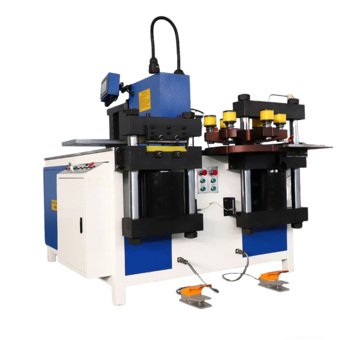
FengHua busbar shearing machines are suitable for cutting copper and aluminum busbars to length. Maximum shearing width and thickness, shearing length, cut quality, burr condition, and waste material handling method. When ordering multiple specifications, much manual operation is required to change specifications.
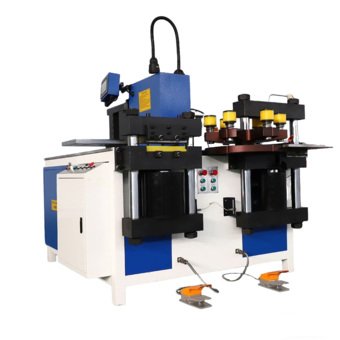
Busbar bending machines are used for flat bending, vertical bending, and other specified structures of copper and aluminum busbars. Maximum busbar size, bending angle, bending radius, die space, and angle correction method. CNC or servo positioning can reduce repeated scribing; bend positions are programmed and verified.
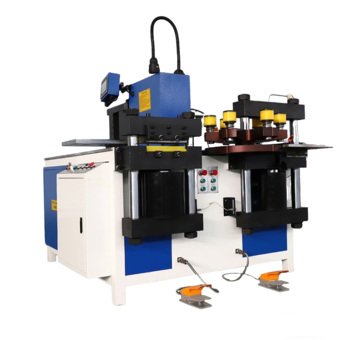
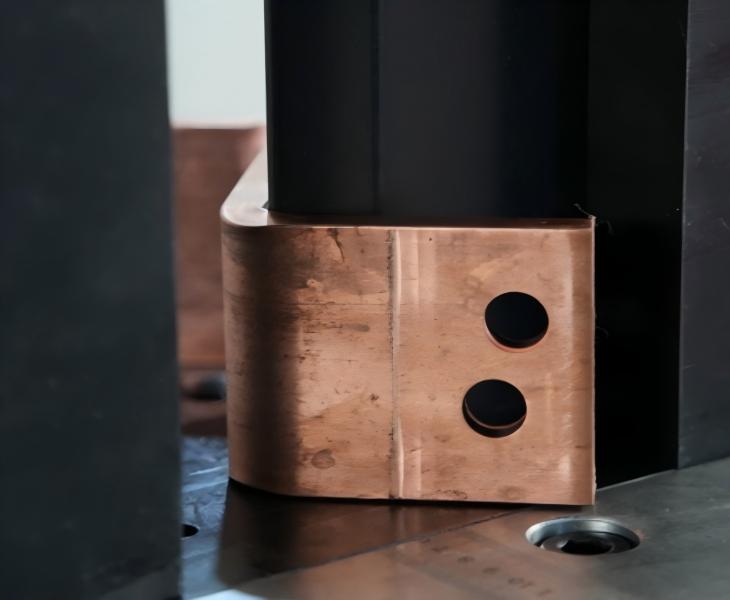
Copper busbar machining is used for switch cabinets, distribution cabinets, transformers, and busbar trunking. You need to provide drawings for the copper busbar material, width, thickness, hole positions, hole diameter, shearing length, and bending. FengHua can review the processing range and tooling configuration against representative drawings and sample requirements.
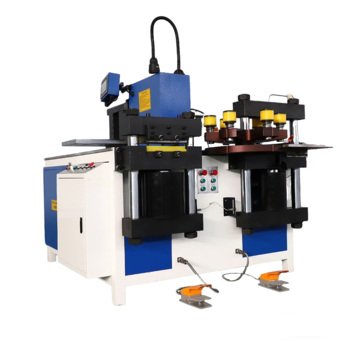
Aluminum busbar processing requires attention to punching, shearing, and bending. Aluminum busbar width, thickness, length, hole type, bending structure, and allowable tolerances. Provide typical drawings and purchasing information so you can confirm the machine configuration, tooling, and sample-processing results.
CNC Busbar Processing Machine Selection Guide
| Production Need | Recommended Type | Key Check |
| Repeated mixed operations | CNC 3-in-1 | Control of each station |
| Frequent punching and cutting | CNC punching & shearing machine | Feeding travel, gripper limits and cycle time |
| Bending is the main bottleneck | CNC bending machine | Flat/vertical capacity, tooling and angle correction |
| High-volume repeat production | Separate line | Cycle time, staffing and automation interfaces |
Use the table for initial configuration screening only. Final machine selection should be based on representative drawings, operation-specific capacities, positioning requirements, tooling, batch size and required conforming output.Confirm the controlled axes and remaining manual operations before approving a CNC configuration.
CNC Busbar Processing Machines

Busbar machining requires sufficient space for loading, unloading, and finished-part handling. Equipment’s external dimensions, workbench space, infeed/outfeed directions, and operating area in advance. In workshops with limited space, poor layout planning can increase handling distance.

When machining long copper or aluminum busbars, the workbench support and workpiece movement. Excessively long busbars or difficulties in manual handling. equipment’s support method for long workpieces and the number of operators required for material handling.

Busbar production orders may include multiple part numbers, dimensions and processing programs. Confirm how programs are named, stored, revised and recalled, and how operators verify the correct program, tooling and material before production. Changeover time should include program loading.

After inspecting the hole positions, cuts, bending shapes, and surface condition. Testing methods used for the equipment’s factory testing, as well as the manufacturer’s acceptance criteria for actual workpieces. Clearly stating the finished product easier to determine the equipment’s production.
How to Assess CNC Busbar Processing Efficiency
Do not evaluate efficiency only by the fastest single operation. Measure the complete production cycle from material loading to a conforming finished part, including positioning, punching, shearing, bending, handling and inspection. For mixed orders, also compare changeover time, operator count and conforming output per shift.
CNC Control and Electrical Requirements
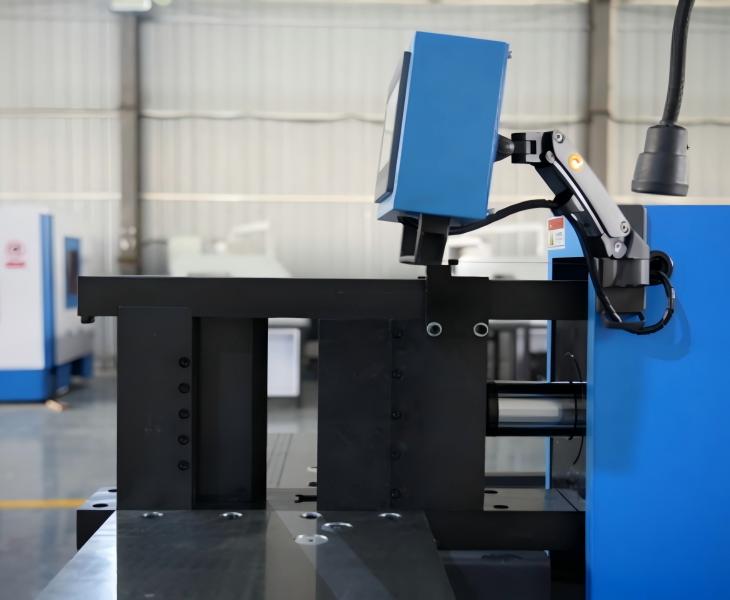
Confirm which axes or variables are CNC- or servo-controlled, the effective positioning travel, program-storage capacity, parameter-backup method and operator permissions. Electrical requirements should be confirmed by model, including voltage, frequency, phase, installed power and destination-country.
CNC Busbar Processing Machines Applications
CNC busbar processing machines are used for copper and aluminum busbar production in switchgear, distribution panels, transformers, busbar trunking cabinets, and EV charging equipment. Machine selection should be based on the finished-part drawings, conductor material, busbar dimensions, hole layout, and bending structures required by each application.
Compare tooling, consumables, hydraulic oil, electrical components, first-year spare parts, maintenance, software access, installation and on-site service costs. Use the same technical scope when comparing quotations so that a lower machine price does not hide additional tooling or service costs.
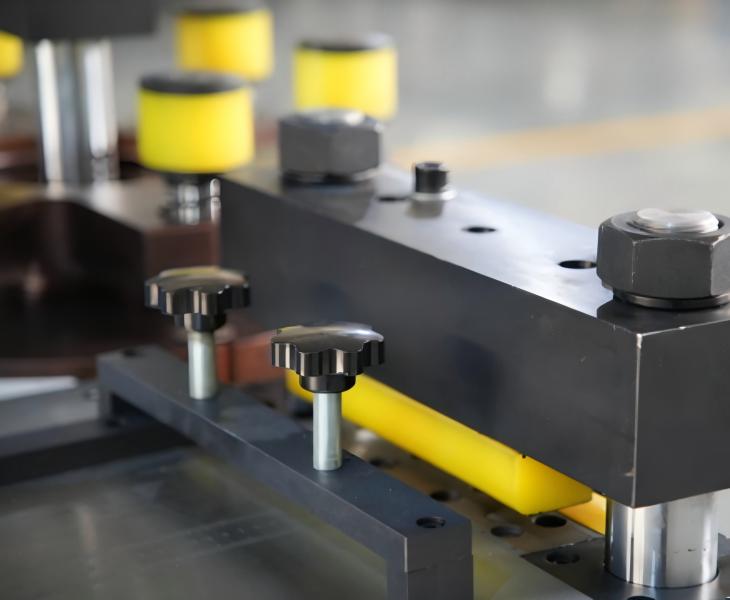
Changeover time depends on the station, tooling type, machine structure and operator procedure. Ask the supplier to demonstrate a representative punching-die or bending-tool change during FAT and record the time from the last conforming part of one setup to the first conforming part of the next.
Routine maintenance may include hydraulic-oil and filter checks, lubrication, tooling inspection, fastener checks, sensor cleaning and electrical inspection. Request the model-specific maintenance schedule, consumable-part numbers and recommended first-year spare-parts list before shipment.
Confirm the remote-support channel, fault-diagnosis procedure, parameter backups, and spare-parts conditions for on-site service. The quotation should also state who is responsible for replacement-part costs when on-site support is required.
Confirm model-specific wear and consumable parts, dies, shear blades, and seals. Ask for part numbers, recommended first-year quantities, unit prices, and expected replenishment lead times so that routine maintenance can be planned before production starts.