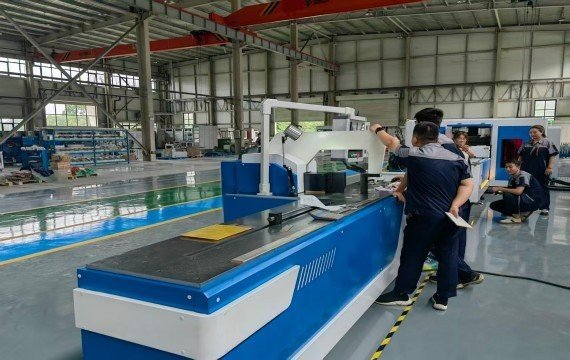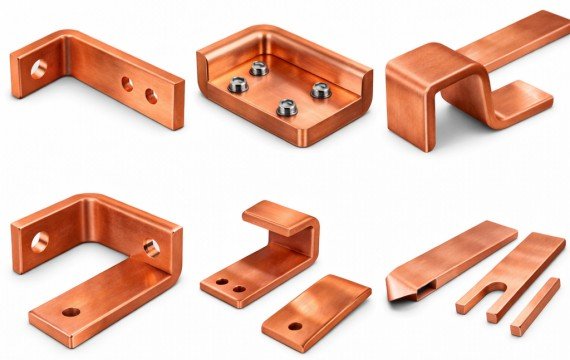
A busbar cutting machine cuts copper or aluminum busbars before punching, bending, assembly, or installation. Hydraulic force, CNC control, servo positioning, and automatic feeding may exist within the same machine’s technical functions. This guide explains how the main busbar cutting machine types differ and which cutting, positioning, control, and material-handling features define each configuration.
Quick Answer
A busbar cutting machine separates copper or aluminum busbars to a defined length before subsequent punching, bending, or assembly. For industrial comparison, these machines have common production configurations.
| Configuration | How To Recognize It | Typical Processing Structure |
| Dedicated Cutting Machine | Cutting is the primary standalone operation | Cutting only |
| CNC/Servo-Positioned Dedicated Cutter | Dedicated cutting plus controlled length positioning | Cutting + programmable positioning |
| Integrated Cutting System | Cutting is combined with other busbar operations | Cutting + punching and/or bending |
Hydraulic, CNC, servo and automatic describe different technical layers of these machines rather than interchangeable machine categories.
What Is A Busbar Cutting Machine?
A busbar cutting machine may refer to either a standalone cutting machine or the cutting section of a larger busbar processing system. The cutting application is normally described by the material grade or alloy and temper, width × thickness, raw-bar length and required finished length.
A copper busbar cutting machine refers primarily to the material being processed rather than the machine’s control or positioning technology. Depending on the approved machine and tooling, aluminum busbars may also be applicable; material and capacity should be defined for the specific model. For this reason, the machine name alone is not enough to identify its cutting, positioning, or automation configuration.
How Does A Busbar Cutting Machine Work?
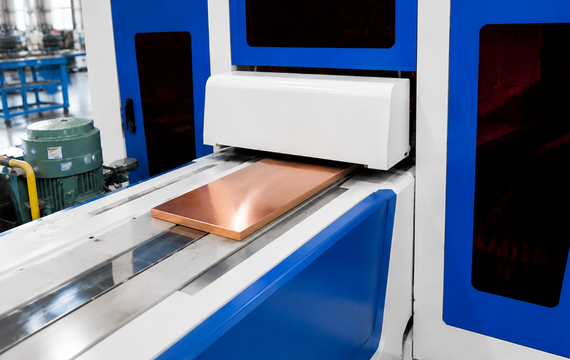
A busbar cutting machine normally follows three stages: positioning, cutting and part removal. First, the busbar is located at the required cutting position using the machine’s positioning system.
The cutting unit then drives the blade or cutting tool through the material. In many shearing-type machines, a hydraulic system drives the cutting unit through the cutting stroke. After cutting, the finished blank is removed or transferred to the next production stage. Feeding and part-transfer methods depend on the machine configuration.
What Busbar Cutting Machine Configurations Are Common In Industry?
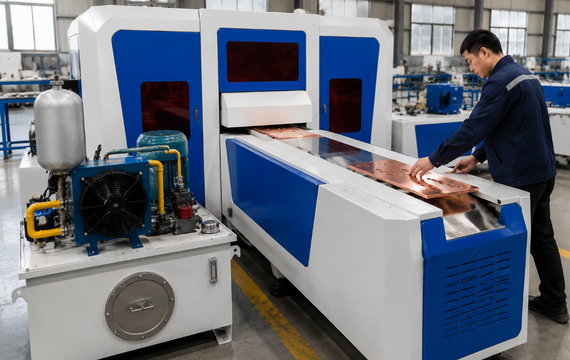
Busbar can be grouped more clearly by production architecture: standalone cutting with manual or digital positioning, dedicated cutting with CNC or servo positioning, and cutting with additional busbar-processing operations. Hydraulic, CNC, servo, and automatic functions may exist and should be described separately.
Manual Or Digital Positioning
A dedicated busbar cutting machine keeps cutting as a standalone operation. Depending on the machine design, cutting length may be set using a manual stop, mechanical scale, or digital positioning device. In many configurations, hydraulic force drives the cutting unit, which is why described as a hydraulic busbar cutting machine.
Punching and bending remain separate operations when they are performed on other machines or stations. Material loading, length setting and finished-part removal may remain operator-controlled depending on the actual configuration.
CNC Or Servo Positioning
A dedicated CNC busbar cutting machine or servo-positioned cutter adds controlled length positioning to a standalone cutting process. The cutting unit may still use hydraulic force while a controlled axis moves the material, feeder or positioning stop to a programmed position. Depending on the control system, cutting lengths, positioning values or part programs may be stored and recalled.
The controlled axis, usable positioning travel, program functions, and remaining manual operations should be identified. CNC-controlled positioning does not automatically mean that loading, unloading, or finished-part inspection is automatic.
Integrated Busbar Cutting System
An integrated busbar cutting system combines cutting with one or more additional busbar-processing operations on the same machine platform or production system. A 3-in-1 busbar processing machine combines cutting, punching and bending stations within one machine platform.
Another architecture may combine programmable feeding, punching and shearing in a CNC busbar punching and shearing machine. FengHua’s GJBM303, GJBM503 and GJBM803 are current examples combining cutting, punching and bending. The cutting, punching and bending stations should still be understood separately because their applicable capacity, tooling and controlled functions may differ.
Which Features Define A Busbar Cutting Machine?
The main machine features describe how the busbar is cut, positioned, controlled, and handled through the cutting process. These machine-finished-part quality and production output should be verified separately under defined operating conditions.
Cutting Unit And Blade Configuration
The cutting unit determines how cutting force is transferred through the blade and matched tooling into the copper or aluminum busbar. Buyers should distinguish blade geometry, tooling alignment, cutting clearance, cutting stroke, material support and blade-replacement method.
Different machine designs may use different blade and tooling arrangements, so these features should be checked according to the actual cutting-unit structure. Finished-cut conditions should be evaluated separately through the agreed part requirements and measurement method.
Positioning And Material Handling
Busbar positioning may use a manual stop, digital length display, servo-controlled axis or automatic feeding system. Long busbars may also require support tables, rollers or feeding mechanisms before and after the cutting station.These components define how the material is supported and how much handling remains operator-controlled.
For an automatic busbar cutting machine, confirm which stages of loading, feeding, positioning, cutting and finished-part removal are actually automated. Automatic feeding does not automatically mean that the complete production sequence is unattended.
Production Control Function
The configuration: a control system may manage cutting lengths, positioning values, controlled-axis movement, or stored part programs. The term CNC busbar cutting machine should not replace a description of the actual controlled functions.
Program storage and recall may support recurring production, but storage capacity depends on the controller and machine configuration. The specification should therefore identify the controller, controlled axes, and whether the program remains manual.
What Do Hydraulic, CNC, Servo And Automatic Mean In Busbar Cutting?
Technical layers of a machine should not be used as interchangeable machine classifications.
| Term | Describes | Role In Busbar Cutting | Does Not Automatically Mean |
| Hydraulic | Force-generation method | Drives the cutting or shearing unit | CNC control or automatic feeding |
| CNC | Control method | Controls programmed positions or machine functions | Fully automatic production |
| Servo | Motion and positioning technology | Moves a controlled positioning or feeding axis | Defines the entire machine architecture |
| Automatic | Automation scope | Reduces repeated operator intervention | Every production step is unattended |
A machine may therefore use hydraulic cutting force, CNC control, servo positioning and automatic feeding at the same time.
Frequently Asked Questions
What Electrical Configuration Should An Importer Confirm Before Ordering?
Importers should confirm voltage, frequency, phase, HMI language, and required electrical documentation before ordering. These details should be included in the quotation, electrical drawings, and final technical agreement. The approved configuration should machine being supplied rather than being copied from another model.
How Should An Importer Compare Quotations With Different Tooling Packages?
Importers should compare the complete delivery scope rather than only the machine price. Check the supplied blades, standard tooling, optional tooling, spare parts, material supports, manuals, training and replacement-tool or spare-parts lead times. Two quotations are not directly comparable when their included tooling and technical-support scopes are different.
When Does It Make Sense For A Distributor To Stock A Demonstration Machine?
A distributor may consider stocking a demonstration machine when local customers regularly request sample cutting, machine demonstrations or short local delivery times. The demonstration model should represent common copper or aluminum busbar dimensions and customer applications in the local market. Before stocking, consider workshop space, operator training, spare-blade availability and the technical support you can provide after resale.
Final Thoughts
Submit your CAD or PDF busbar drawings, material grade, width × thickness range, cutting length, tolerance, burr requirement, production volume, voltage and required process scope. Fenghua can review whether a dedicated cutting machine, CNC/servo-positioned cutter, hydraulic cutter or integrated punching-cutting-bending system is more suitable, helping reduce configuration mismatch, material waste, hidden tooling cost and post-delivery modification risk.