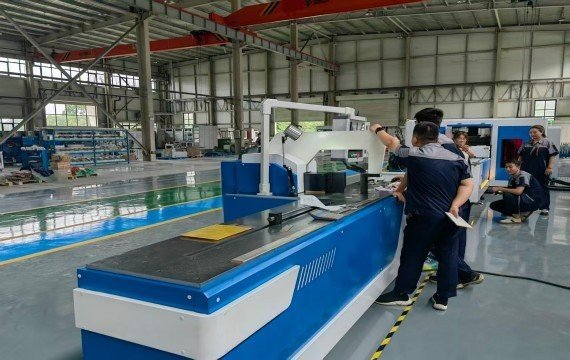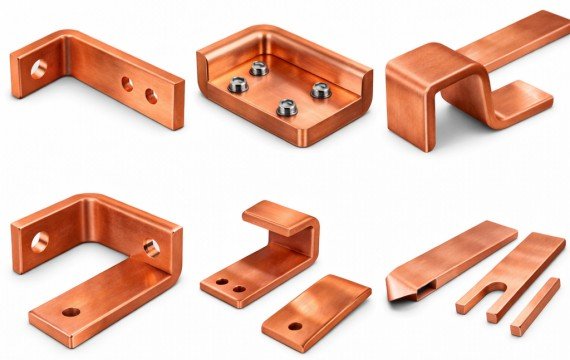
Hydraulic, 3-in-1, CNC, and automatic do not describe four completely separate busbar machine types. Hydraulic describes how processing force is generated, 3-in-1 describes process integration, CNC describes programmable control, and automatic describes the extent of material handling and processing automation.
One busbar machine may combine several of these characteristics. This comparison explains how the configurations differ in positioning, operator involvement, tooling, output, floor-space requirements, and factory acceptance testing.
Quick Answer
Choose the configuration according to your production mix, required operations, positioning needs, material-handling requirements and conforming output—not only by factory size or equipment price.
Hydraulic describes force generation, 3-in-1 describes process integration, CNC describes programmable control, and automatic describes the extent of material handling. These terms may apply to the same machine.
| Production Requirement | Starting Configuration | Critical Buyer Check |
|---|---|---|
| Mixed drawings and flexible low-volume work | Hydraulic machine with manual or assisted positioning | Operation-specific capacity, tooling and positioning time |
| Punching, shearing and bending in limited floor space | 3-in-1 busbar machine | Capacity of each station and station independence |
| Recurring coordinates and frequent model changes | CNC or servo-positioning machine | Controlled axes, program recall and remaining manual tasks |
| Stable repeated punching and fixed-length cutting | Automatic punching and shearing line | Feeding, gripper dead zone, unloading and conforming output |
| Complex repeated bending | Dedicated programmable bending machine | Controlled variables, tooling clearance and finished-part variation |
| Parallel high-volume production | Separate machines or an automatic line | Staffing, material flow, inspection and complete cycle time |
These recommendations are starting points. Final selection requires drawing review, operation-specific capacity confirmation and representative sample testing.
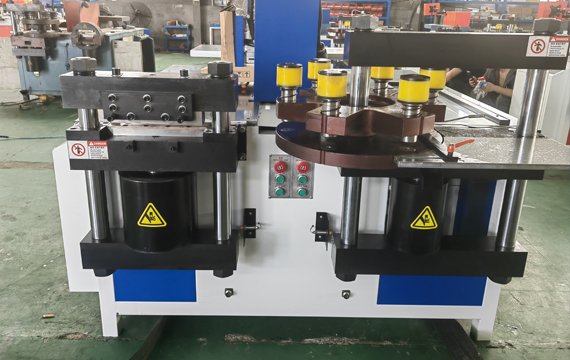
Which Processing Functions Do You Need?
Busbar machines may perform shearing, punching, bending or a combination of these operations. Confirm the required processes before comparing control and automation configurations.
| Operation | Buyer Verification |
|---|---|
| Shearing | Material size, finished length, tolerance, squareness, burr and deformation |
| Punching | Hole and slot sizes, edge distance, tooling reach, die clearance and burr |
| Bending | Flat or edge bending, angle, inside bend radius, tooling and machine clearance |
A machine name does not prove that every required operation is included or that every station has the same maximum capacity.
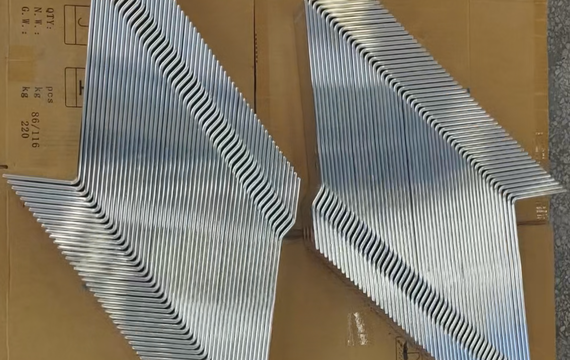
Busbar Cutting
Busbar cutting determines the size of copper or aluminum busbars. Incorrect cutting dimensions can prevent the busbar from fitting into the power distribution equipment and increase the time required for on-site adjustments.
Professional busbar cutting machines minimize manual measurement errors, enhance dimensional need for secondary trimming. If your workshop processes many busbars with different lengths every day, choose a machine with stable positioning, clear length adjustment, and reliable cutting tooling. Consistent cutting quality minimizes burrs, material waste, and processing losses, thereby boosting production efficiency.
Busbar Punching
Busbar punching involves creating mounting holes for circuit breakers, terminals, and electrical connections. Deviations in hole positioning can compromise assembly efficiency and increase the workload associated with installation adjustments.
A professional busbar punching machine improves hole-position accuracy during cabinet assembly. include multiple hole diameters, slotted holes, or frequent hole-position changes, confirm the punching die range and positioning method before ordering. Equipment punching die configurations accommodate different hole diameters and shapes, optimizing workshop processing capabilities.
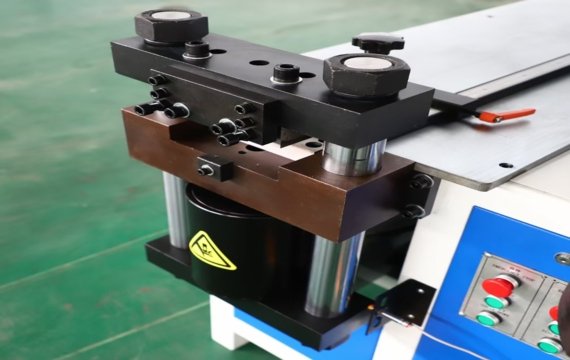
Busbar Bending
Busbar bending determines the installed shape of the finished busbar. Incorrect bending installation interference within the cabinet complicates assembly.
A reliable busbar bending machine helps you control bending angles and improve cabinet assembly efficiency. If your production includes repeated 90-degree bends, offset bends, U-bends, or Z-bends, CNC parameter storage can improve repeatability. The CNC parameter storage function reduces manual setup time, enhances changeover efficiency, and lowers the operational workload.
How Should Published Capacity Be Interpreted?
A published maximum width × thickness does not prove that punching, shearing, flat bending and edge bending can all process that maximum material size.
Confirm each required operation separately according to material grade, temper, tooling and drawing geometry. This article compares machine configurations; use the detailed copper busbar machine buyer’s guide for a complete operation-specific capacity review.
Maximum Busbar Thickness
The maximum busbar thickness capacity of copper or aluminum busbars that the equipment can process. A machine with insufficient processing force may slow production, increase tool wear, and limit the busbar thickness your workshop can handle.
Processing thicker busbars requires a robust hydraulic system and durable tooling. Selecting equipment with ample thickness capacity for future project expansions.
Maximum Busbar Width
The equipment’s working width affects busbar positioning accuracy and molds. Insufficient processing width may prevent the proper processing of larger busbars, thereby limiting your product range.
Choosing a wider processing range increases machine versatility and reduces the need to replace or add equipment when larger busbars are introduced.
Punching and Bending Capacity
Punching capacity determines the maximum hole diameter and material thickness the equipment can process. Your machine supports round holes, slotted holes, and customized punching dies.
Insufficient capacity hole positioning and poor edge quality, potentially compromising subsequent installation.
Bending capacity determines the achievable bending angles and the quality of the formed shape. When purchasing equipment, parameters such as punching force and bending range to ensure your workshop maintains high production efficiency.
Why Are These Terms Not Mutually Exclusive?
Busbar machines can be classified by force generation, process integration, positioning control and material-handling automation. These are separate classification dimensions rather than four mutually exclusive machine categories.
| Classification Dimension | Term | What It Describes |
|---|---|---|
| Force Generation | Hydraulic | How force is generated for punching, shearing or bending |
| Process Integration | 3-in-1 | Whether punching, shearing and bending stations are integrated |
| Control Method | CNC | Whether defined machine variables are programmed and controlled |
| Positioning Method | Servo Positioning | Whether a specific axis moves to programmed coordinates using feedback |
| Material Handling | Automatic | How loading, feeding, positioning, processing and unloading are handled |
A machine may use hydraulic force, integrate three processing stations, control one positioning axis through CNC and still require manual material loading.
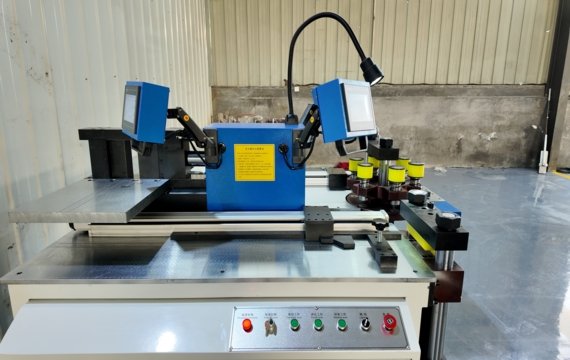
What Is a Hydraulic Busbar Machine?
A hydraulic busbar machine uses a hydraulic system to generate processing force. Hydraulic force may be used for punching, shearing, flat bending, edge bending or customized forming.
The word “hydraulic” does not confirm whether positioning is manual, digital or CNC-controlled. It also does not confirm whether the machine integrates several stations or uses automatic material handling.
A hydraulic configuration may be practical for mixed drawings, flexible orders and applications where automatic feeding does not remove the main production bottleneck.
Buyers should confirm operation-specific capacity, duty cycle, oil cooling, station independence, positioning method, tooling and maintenance access.
What Is a 3-in-1 Busbar Machine?
A 3-in-1 busbar machine combines punching, shearing and bending stations in one platform. It describes process integration rather than the drive, positioning or automation method.
A 3-in-1 configuration may reduce floor-space requirements and workpiece movement between operations. However, buyers should confirm the capacity of each station, whether the stations operate independently and which positioning tasks remain manual.
Do not assume that every station has the same maximum capacity or that all three stations can operate simultaneously.
What Is a CNC Busbar Processing Machines?
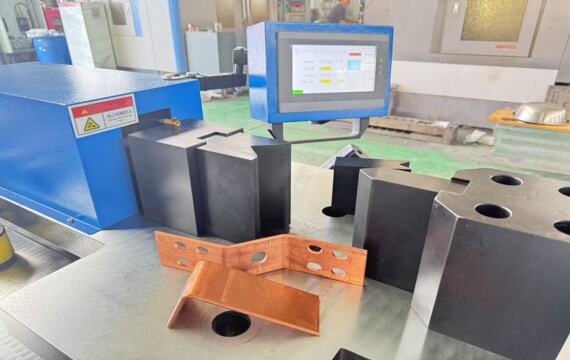
CNC describes programmable control of defined machine variables. Depending on the configuration, CNC may control material position, backgauge position, feeding distance, punching coordinates, cutting length or bending stroke.
CNC does not automatically mean that loading, alignment, tooling changes, part rotation, inspection and unloading are automatic.
Buyers should confirm which axes are controlled, which values are only displayed, the axis travel range, feedback method, program-storage capacity and remaining manual operations.
Controller resolution should not be presented as machine-axis accuracy or finished-part accuracy.
What Is an Automatic Busbar Processing Line?
An automatic line controls a defined sequence of material-handling and processing tasks. Depending on the configuration, automation may include loading, feeding, coordinate positioning, punching, shearing, barcode recognition, unloading or sorting.
The term “automatic” does not prove that every step is automated. Tool changes, first-part inspection, remnant handling, unloading or downstream bending may remain manual.
Automatic equipment is generally more valuable when drawings, raw-material formats and batch quantities are stable. Buyers should verify the exact automation boundary, gripper dead zones, minimum material lengths, changeover time and complete conforming output.
Hydraulic vs 3-in-1 vs CNC vs Automatic Comparison
| Comparison Factor | Hydraulic Machine | 3-in-1 Machine | CNC Machine | Automatic Line |
|---|---|---|---|---|
| Primary Meaning | Force-generation method | Process integration | Programmable control | Material-handling automation |
| Typical Operations | One or several processes | Punching, shearing and bending | Depends on selected machine | Usually repeated feeding, punching and cutting |
| Positioning | Manual, digital or CNC | Manual, digital or servo | Controlled on defined axes | Automatic on defined axes |
| Material Loading | Usually manual | Usually manual | Often manual | Manual, assisted or automatic |
| Tool Changes | Usually manual | Usually manual | Usually manual | Manual or assisted |
| Best Production Pattern | Flexible mixed work | Several processes in one area | Recurring coordinates and changeovers | Stable repeated batches |
| Main Advantage | Flexible processing force | Integrated processing | Programmed positioning | Repeated material handling |
| Main Buyer Risk | Confusing force with automation | Assuming every station has equal capacity | Assuming every displayed value is controlled | Assuming the complete process is automatic |
How Do Tooling and Changeovers Affect the Comparison?
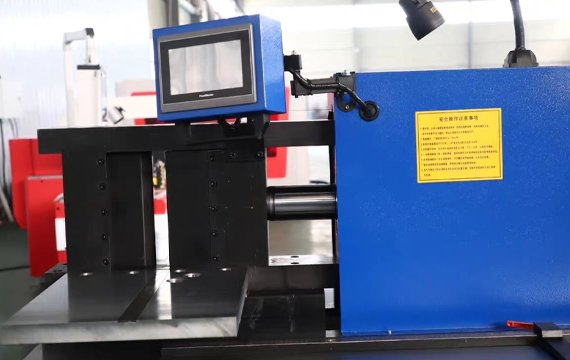
Tooling can limit a machine even when the equipment has sufficient processing force. Confirm:
- Included standard tools
- Optional standard tools
- Customized tools
- Applicable materials and thicknesses
- Hole and slot dimensions
- Flat- and edge-bending tools
- Tool installation method
- Surface-protection requirements
- Replacement and regrinding lead time
- Recommended spare tooling
Measure complete changeover time from the last conforming part of Model A to the first conforming part of Model B. Include program selection, tool removal, tool installation, material loading, test processing, correction and first-part inspection. Do not compare only the time required to open a program or remove one die.
Which Configuration Fits Different Production Patterns?
Different production requirements require different machine configurations. The following selection matrix helps with the busbar machine for your factory.
| Production Pattern | Starting Configuration | Reason | Critical Verification |
|---|---|---|---|
| High-mix, low-volume parts | Hydraulic or assisted-positioning machine | Flexible setup and tooling | Setup-to-first-conforming-part time |
| Mixed punching, shearing and bending | 3-in-1 machine | Several processes in one area | Capacity and independence of each station |
| Recurring medium batches | CNC or servo-positioning machine | Program recall and repeated coordinates | Controlled axes and changeover time |
| Stable high-volume punching and cutting | Automatic punching and shearing line | Repeated feeding and positioning | Complete conforming output |
| Complex bending bottleneck | Dedicated programmable bending machine | Specialized control and tooling | Finished angle and interference |
| Parallel high-volume production | Separate dedicated machines | Several operations can run simultaneously | Staffing, floor space and material flow |
Do not select a configuration only from factory size or industry name. A small factory may produce stable repeated batches, while a large manufacturer may process customized low-volume orders.
What Information Is Needed for a Configuration Comparison?
Providing complete production information helps the manufacturer compare hydraulic, 3-in-1, CNC, and automatic solutions and prepare a more accurate quotation.
| Information | Why It Is Needed |
|---|---|
| Material Grade and Temper | Affects force, tooling, burr formation and springback |
| Width × Thickness Range | Defines the operation-specific capacity range |
| Required Operations | Confirms whether integrated or dedicated equipment is suitable |
| Drawing and Batch Mix | Shows drawing variety, recurring parts and changeover frequency |
| Required Conforming Output | Helps compare complete cycle time and automation needs |
| Required Automation Boundary | Defines which loading, positioning, processing and unloading tasks should be controlled |
For a complete drawing, tooling, capacity and FAT review, refer to the copper busbar machine buyer’s guide.
What Should Be Verified During FAT?
| FAT Item | Buyer Verification |
|---|---|
| Machine Identification | Model, serial number and approved configuration |
| Controlled Functions | Axes, stations and automation scope |
| Test Drawing | Drawing number and revision |
| Test Material | Grade, temper, width and thickness |
| Tooling | Codes, quantities and applicable operations |
| Positioning | Commanded and measured controlled-axis positions |
| Finished Parts | Punching, shearing and bending inspection results |
| Batch Consistency | First, middle and final conforming parts |
| Complete Cycle | Material loading through finished-part inspection |
| Changeover | Model A last conforming part to Model B first conforming part |
| Operator Labor | Operators, assistants and total labor time |
| Program Control | Save, recall, edit, back up and restore |
| Material Handling | Loading, feeding, remnants, unloading and sorting |
| Safety | Guards, emergency stops, interlocks and restart behavior |
| Documentation | Manuals, diagrams, parameter backups and spare-parts lists |
| Open Issues | Deviations, corrective actions and approval status |
A short sample test can verify basic processing capability, but it cannot by itself prove long-term reliability, tooling life or sustained process capability.
Frequently Asked Questions
Is a 3-in-1 Busbar Machine Always Hydraulic?
Many 3-in-1 machines use hydraulic force, but 3-in-1 describes process integration rather than the drive or control method. A 3-in-1 machine may also include PLC control, digital measurement or servo positioning.
Is Every CNC Busbar Machine Automatic?
No. CNC means that defined machine variables are controlled through a program. Loading, initial alignment, tooling changes, part rotation, inspection and unloading may still be manual.
When Is a Hydraulic Busbar Machine More Practical?
A hydraulic machine may be practical for mixed drawings, flexible orders and applications where automatic feeding does not remove the main production bottleneck. Final suitability depends on positioning method, tooling, required operations and conforming output.
When Is an Automatic Busbar Line Justified?
An automatic line may be justified when drawings, raw-material formats and batch quantities are stable enough for repeated feeding and processing. Confirm the complete automation boundary, changeover requirements, remnant handling and conforming output before purchase.
Can One Machine Process Both Copper and Aluminum?
Some machines can process both materials, but the same tooling clearances and process settings should not automatically be used for every copper or aluminum grade. Confirm material grade, temper, thickness, surface condition, tooling and springback through representative samples.
Final Thoughts
The right busbar machine means selecting equipment that matches your production requirements, improves machining accuracy, supports future expansion, and delivers long-term value. If you are planning to purchase a busbar machine, send Fenghua your busbar material, thickness, width, hole drawings, bending requirements, daily output, factory voltage, and destination country. Our engineering team will evaluate your project busbar processing solution for your factory.