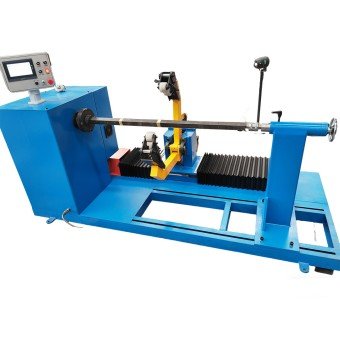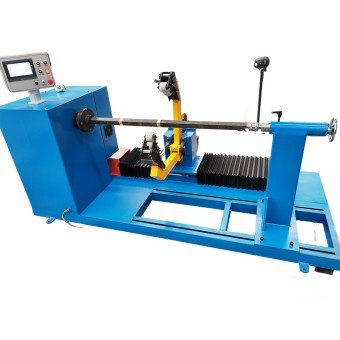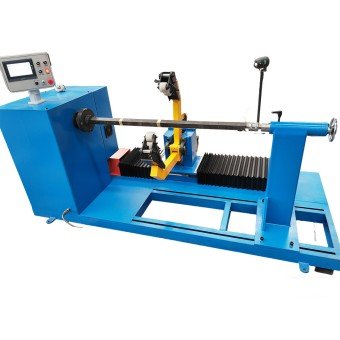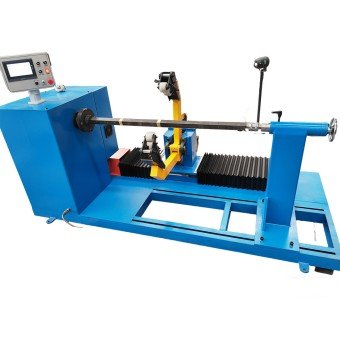
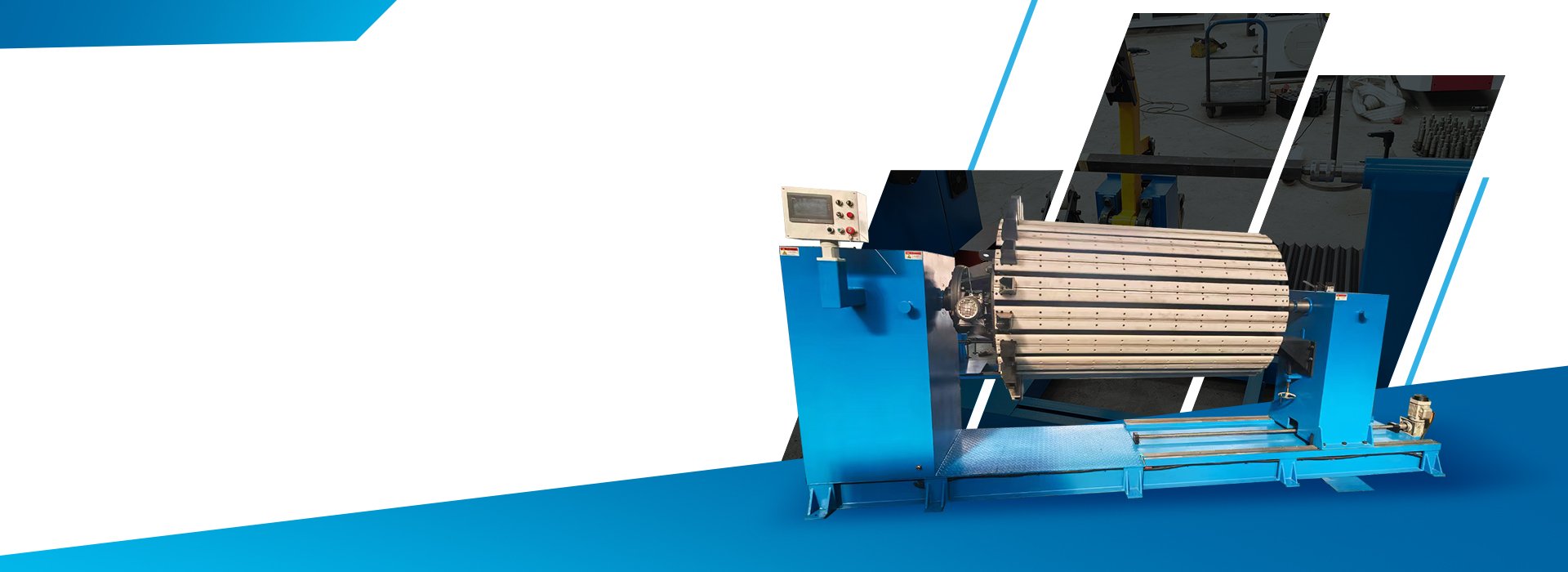
Your Professional Transformer Winding Machine Manufacturer
If you are looking for a leading transformer winder manufacturer in China, Fenghua CNC is your best choice. Fenghua CNC’s transformer winders are mainly used for winding coils of distribution transformers, power transformers, and various special transformers. They can automate the winding of copper wires, aluminum wires, and other conductors, improving the winding efficiency of your workshop and reducing rework rates.
Compared with traditional manual winding, Fenghua CNC’s transformer winding machines have significant advantages in winding accuracy, operating speed, and stability. Through the coordinated operation of a high-performance CNC control system and a precision transmission mechanism, each coil’s number of turns and winding arrangement meet the transformer design requirements.
We have a professional technical team that can provide customized transformer winder solutions based on your transformer model, wire diameter range, coil size, and other requirements, improving your production efficiency.
RX-2 Horizontal Winding Machine Configuration
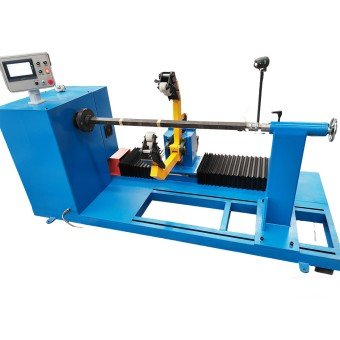
The RX-2 project requirement specifies a variable-frequency motor and a spindle speed range of 0–70 r/min. Operating speed should be selected according to the winding load, conductor specification, mandrel balance, required torque and coil-quality criteria.
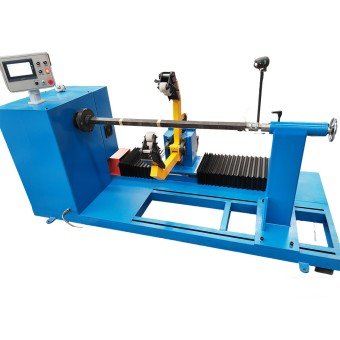
The spindle supports forward and reverse rotation. The specified electronic counter provides reversible counting and power-off memory, with a stated range of 0–9,999 turns. The FAT should define how counting accuracy or resolution will be verified.
The project requirement includes motor braking to support controlled stopping and spindle self-locking after the machine stops. The FAT should test stopping performance under an agreed winding load and operating speed.
The tailstock can move along the machine base, while the telescopic shaft has a specified stroke of 0–100 mm. Confirm the mandrel connection plate, shaft interface, locking method and allowable load in the approved layout drawing.
How to Select the Right Transformer Winding Machine
| Production Requirement | Recommended Machine Type | Suitable Applications | What You Should Confirm |
|---|---|---|---|
| Heavy coils requiring horizontal support | RX-2 Horizontal Winding Machine | Large-capacity laminated coils and heavy transformer windings | Maximum dynamic load, spindle torque, shaft length, mandrel interface and braking test |
| Repeated coils requiring automatic wire laying | Automatic Wire-Traversing Winding Machine | Repeated distribution, instrument and reactor coils | Controlled axes, traverse pitch, tension method, program storage and complete cycle time |
| Multi-layer high-voltage wire coils | HV Winding Machine | HV transformer coils with layer insulation | Conductor range, winding direction, tension, insulation placement and layer structure |
| Low-voltage wire or strip coils | LV Winding Machine | Distribution and power-transformer LV windings | Conductor format, coil dimensions, torque, guiding method and mandrel design |
| Circular transformer coils | Round Transformer Winding Machine | Round power, distribution and instrument-transformer coils | Coil diameter, concentricity, mandrel size, finished height and winding load |
| Copper or aluminum foil coils | Transformer Foil Winding Machine | LV foil coils for dry-type and oil-immersed transformers | Foil width and thickness, decoiler, edge alignment, insulation feeding and joining method |
The machine name alone does not confirm suitability. Compare the exact model, approved configuration, representative coil test and FAT results against your drawings.
How to Compare Transformer Winding Machine Manufacturers in China
| Comparison Factor | What to Confirm | Evidence to Request |
|---|---|---|
| Real Machine Model | Exact model and included configuration | Nameplate and technical sheet |
| Winding Load | Operating load, not only static frame capacity | Load test and written confirmation |
| Spindle System | Speed, torque, shaft and effective length | Drawings and FAT records |
| Turn Counting | Range, reverse counting and memory | Demonstration and test record |
| Tension and Guiding | Manual, magnetic-powder, servo or other method | Component and function list |
| Automation Boundary | Which functions are automatic | Control-function list |
| Mandrel Interface | Shaft connection and support structure | Approved mandrel drawing |
| FAT | Load, mandrel, conductor and sample coil | Signed FAT plan |
| Documentation | Manuals, electrical drawings and parts list | Document index |
| Service | Installation, training, warranty and spare parts | Written service scope |
Supplier comparisons should be used as an initial shortlist rather than proof of machine quality. Final selection should be based on the proposed model, approved configuration, representative coil test, FAT results and contract terms.
Fenghua CNC Transformer Winding Machine Features

Customize your transformer winding machine based on coil size, wire diameter range, and project production requirements.

Equipped with an automatic control system to accurately control the number of coil turns, ensuring consistency for every coil in mass production.

The machine frame and core components are made of high-strength materials, supporting continuous and stable winding.

Equipped with a visual control system for quick adjustment of operating parameters according to different coil specifications.
What Can Be Confirmed for a Customized Winding Machine?
Transformer winding machines should be configured according to the coil drawing, maximum winding load, conductor specification, mandrel structure, operator position and available workshop space.
For the RX-2 project, the supplied requirement specifies a left-side winding head when viewed from the operator’s winding position, a spindle-to-cabinet distance of 1,000–1,500 mm and a 1,500 mm effective spindle length. The tension-controller position and machine color are confirmed after the contract.
The supplied document states a machine size of 650 × 3,000 mm but does not provide a complete length × width × height definition. Confirm the complete machine outline, loading clearance, maintenance clearance and foundation requirements in the final layout drawing.
| Configuration Item | RX-2 Project Requirement | Final Confirmation |
|---|---|---|
| Winding Head Direction | Left side from the operator position | Approved layout drawing |
| Effective Spindle Length | 1,500 mm | Mandrel drawing and FAT |
| Spindle-to-Cabinet Distance | 1,000–1,500 mm | Workshop layout |
| Tailstock Stroke | 0–100 mm | Dimensional inspection |
| Tension Controller Position | Near the winding head | Confirmed after contract |
| Machine Color | To be selected | Confirmed after contract |
| Published Size | 650 × 3,000 mm | Complete L × W × H required |
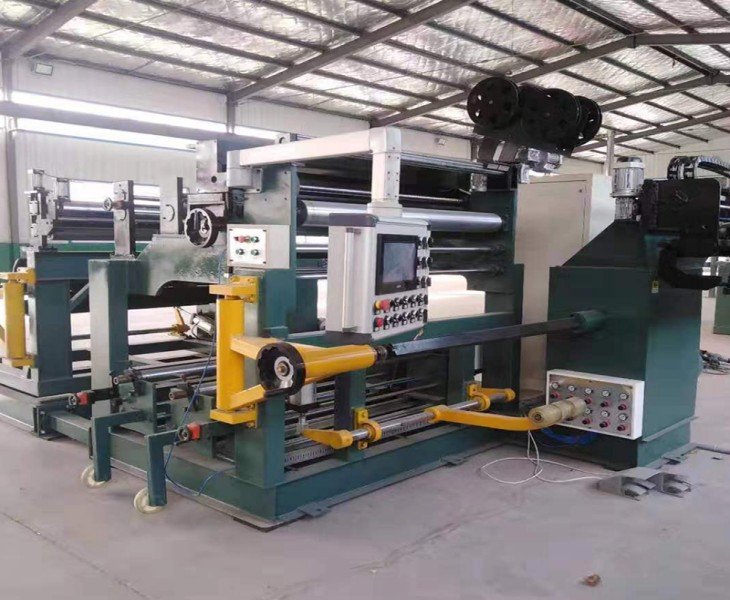
How Should Transformer Coil Winding Quality Be Verified?
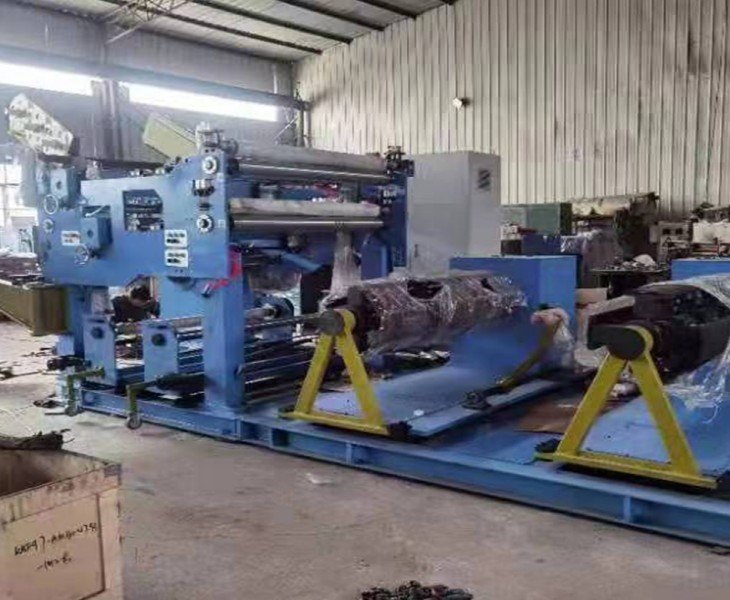
Transformer coil quality should be verified against the approved drawing and winding-process requirements rather than general claims such as high precision or stable quality.
Inspect the finished turn count, winding direction, coil internal and external dimensions, finished coil height, layer quantity, wire or strip arrangement, insulation position, start and end lead positions, surface condition and mandrel stability.
For repeated production, compare coils produced at the beginning, middle and end of the agreed test run. Record the measurement instruments, sample quantity, tolerance limits and results in the FAT report.
Turn Counting and Power-Off Memory
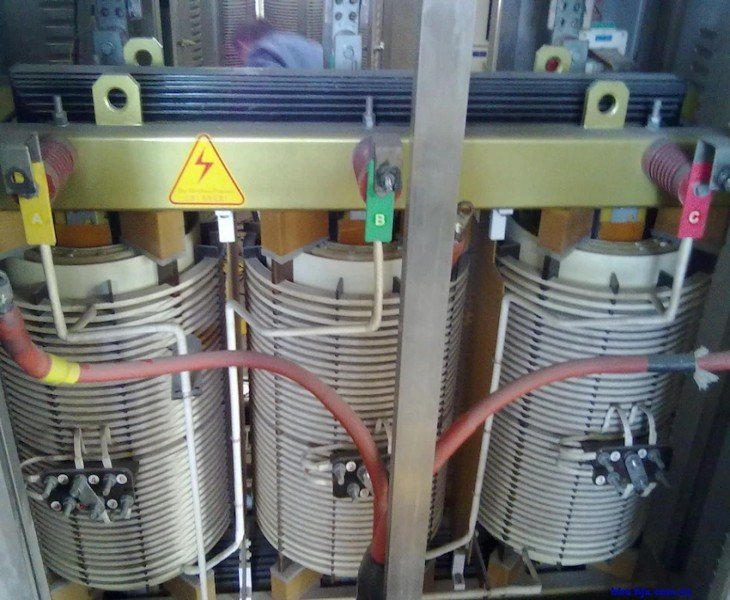
The RX-2 project requirement specifies an electronic digital counter with a range of 0–9,999 turns, reversible counting and power-off memory.
Because the supplied document uses the phrase “counting accuracy is not less than 0.1 turn,” the technical agreement should clarify whether 0.1 turn refers to display resolution, counting accuracy or the FAT acceptance limit.
The FAT should verify forward counting, reverse counting, power-off memory and the displayed count against a known number of spindle rotations.
Heavy-Load Winding With Controlled Speed
he RX-2 project requirement specifies a winding load of at least 2,000 kg, a spindle speed range of 0–70 r/min and a maximum spindle torque of at least 400 N·m.
Maximum speed should not be treated as the normal speed for every coil. The operating speed must be selected according to the actual winding load, conductor specification, mandrel balance, shaft support, torque demand and required coil quality.
Before final acceptance, test the machine with an agreed mandrel and representative load. Record the operating speed, stopping performance, vibration, shaft movement and finished coil results.
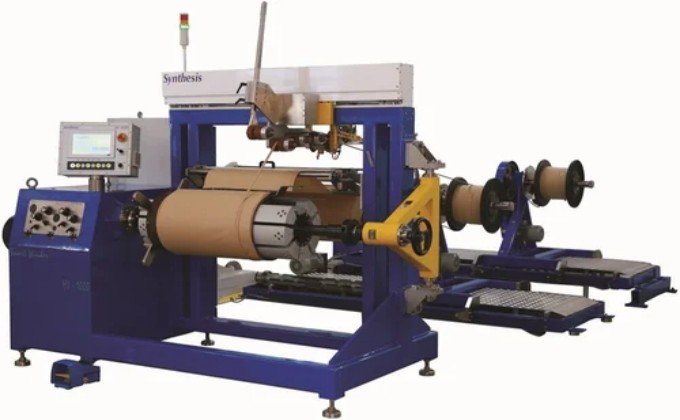
Fenghua’s transformer winding machines feature a stable spindle and transmission system, enabling faster and more precise winding speeds, thus shortening delivery times.
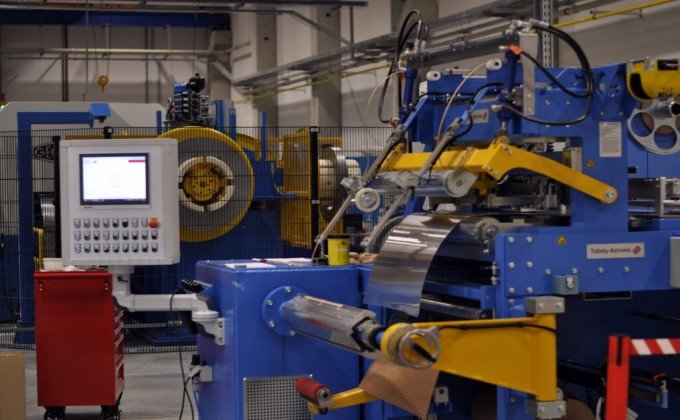
For recurring coil production, use the same approved conductor, mandrel and winding settings to produce an agreed sample batch. Compare turn count, coil dimensions, layer arrangement, lead positions and surface condition across the tested coils.
Do not use general terms such as identical coils or zero variation unless they are supported by recorded measurement results.
The supplied RX-2 requirement confirms variable-frequency speed control, reversible winding, motor braking and electronic turn counting. It does not confirm PLC control, touchscreen operation, servo wire traversing or complete CNC automation. These functions should be listed separately when included in the proposed configuration.
The supplied project requirement specifies a maximum winding load of at least 2,000 kg. The technical agreement should also define the test mandrel, load distribution, operating speed and FAT method used to verify the requirement.
The specified spindle speed range is 0–70 r/min. The suitable operating speed depends on the winding load, conductor specification, mandrel balance, required torque and coil-quality requirements.
Compatibility depends on the conductor material, shape, cross-section, insulation, bending characteristics, tension method, guiding system and torque requirement. Submit the actual conductor specification before configuration confirmation.
Automatic wire traversing is not confirmed in the supplied RX-2 document. It should be treated as a separate configuration unless it is explicitly listed in the approved quotation and control-function description.
The quotation should list the motor brake, emergency stops, guards, warning devices, electrical protection and operating interlocks included with the machine. All agreed safety functions should be tested during FAT.
Provide the transformer application, conductor specification, maximum winding load, coil dimensions, mandrel drawing, number of turns, winding direction, layer structure, automation requirement, production output and workshop electrical supply.