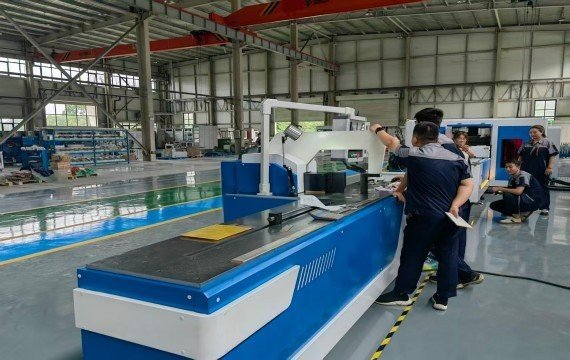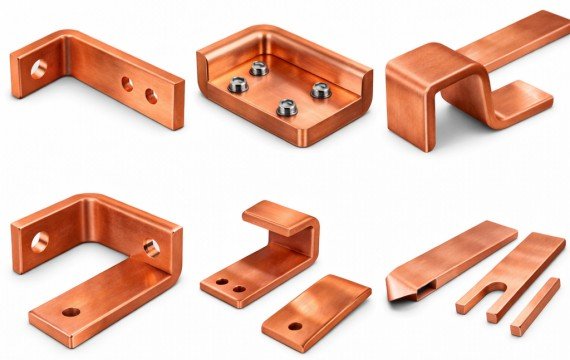
A busbar bending machine is used to form copper and aluminum busbars according to electrical drawings, assembly dimensions, and installation requirements. For switchgear, transformer, energy storage, and power distribution manufacturers, bending accuracy affects cabinet assembly, electrical clearance, production efficiency, and delivery stability. This guide compares manual, hydraulic, CNC, and 3-in-1 busbar bending machines and explains how to choose the right solution based on material size, bending angle, tooling, production volume, and sample testing.
Quick Answer
Busbar bending machines are mainly divided into hydraulic, CNC, 3-in-1, and manual types.
Hydraulic busbar bending machines are suitable for flexible production and customized copper busbar fabrication.
CNC busbar bending machines are designed for repeated production, frequent drawing changes and higher consistency requirements.
3-In-1 busbar processing machines combine punching, shearing and bending functions for manufacturers requiring complete busbar fabrication in one platform.
Manual busbar bending machines are mainly used for simple bending tasks and low-volume production.
| Machine Type | Suitable For |
| Hydraulic Busbar Bending Machine | Flexible production and customized orders |
| CNC Servo Busbar Bending Machine | Repeated models and frequent drawing changes |
| 3-In-1 Busbar Processing Machine | Complete punching, shearing and bending process |
What Specifications Should You Confirm Before Buying?
Before requesting a quotation, prepare the following information. This helps suppliers recommend the right busbar processing solution and provide a more accurate proposal.
| Specification | Why It Matters |
|---|---|
| Busbar Material | Copper or aluminum determines the required processing force and tooling. |
| Busbar Size | Width and thickness determine the machine’s processing capacity. |
| Processing Requirements | Confirm whether you need punching, bending, cutting, or all three operations. |
| Production Volume | Daily or monthly output helps determine the required automation level. |
| Drawing Availability | CAD or PDF drawings allow suppliers to verify processing feasibility and tooling requirements. |
| Maximum Busbar Length | Ensures the machine can handle your largest workpieces. |
| Power Supply | Confirms compatibility with your local electrical standard. |
| Future Expansion Plans | If new busbar sizes or higher production volumes are expected, the machine should allow for future upgrades. |
Why Does Busbar Bending Quality Matter In Electrical Manufacturing?
Busbar bending quality directly affects assembly accuracy, electrical clearance, cabinet layout, and downstream installation. If the bending angle, radius, or finished dimensions are inconsistent, manufacturers may face manual correction, assembly interference, rework, scrap, and delivery delays. Selecting the right busbar bending machine helps improve repeatability and reduce production risk.
How Does A Busbar Bending Machine Work?
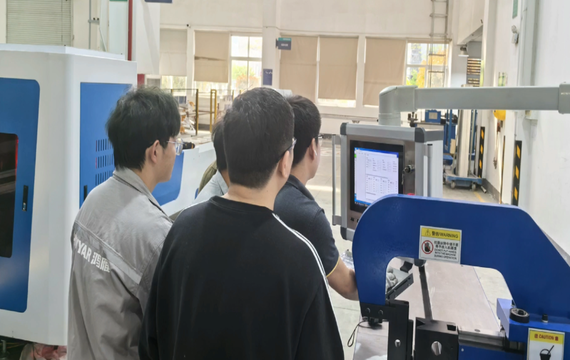
A busbar bending machine forms copper or aluminum busbars by applying controlled force through matched tooling. The final bending result depends on machine tonnage, tooling design, bending radius, material thickness, material temper, angle control, and operator setup. Poor bending accuracy can cause assembly interference, manual correction, scrap, and delayed delivery.
How Are Busbar Bending Machines Classified?
Busbar bending machines are usually classified by power system, control method, and process integration. Hydraulic machines provide forming force, CNC servo machines add program control and positioning accuracy, and 3-in-1 machines combine punching, shearing, and bending in one platform. The correct choice depends on drawings, material size, bending complexity, production volume, and required repeatability.
Manual Busbar Bending Machine
Manual busbar bending machines are suitable for maintenance work, simple bends, low-volume jobs, and budget-sensitive workshops. They require manual measurement and adjustment, so bending repeatability depends heavily on operator skill. They are not ideal for repeated cabinet production or strict dimensional consistency.
Hydraulic Busbar Bending Machine
A hydraulic busbar bending machine is suitable for copper and aluminum busbars in flexible or customized production. Before purchasing, confirm busbar width, thickness, bending angle, bending radius, tooling configuration, and material support. If machine capacity or tooling does not match the product, the result may include incomplete bends, angle deviation, rework, and low efficiency.
CNC Busbar Bending Machine
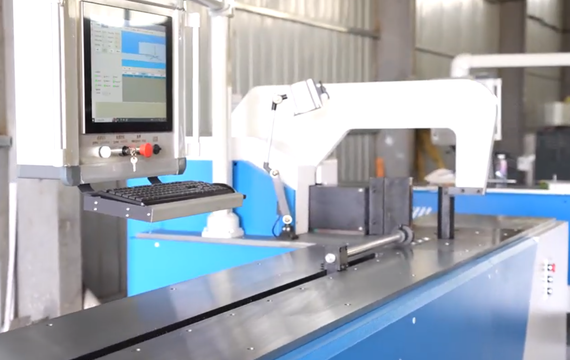
A CNC servo busbar bending machine is suitable for factories that process repeated models, frequent drawing changes, and higher consistency requirements. Program storage, servo positioning, automatic angle control, and repeatable setup can reduce manual measurement and shorten changeover time. Choose CNC servo bending when repeatability, batch consistency, and program management are more important than the lowest initial investment.
3-In-1 Busbar Processing Machine With Bending Function
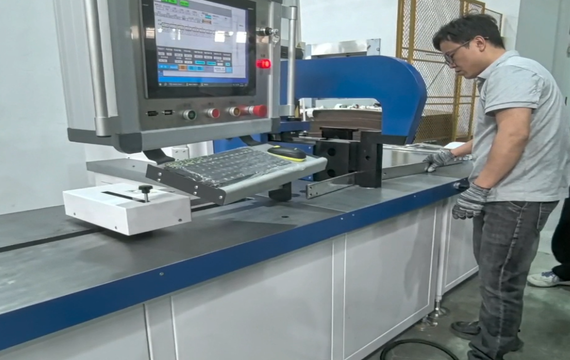
A 3-in-1 busbar processing machine combines punching, shearing, and bending in one platform. It can reduce material handling and workshop footprint when all three processes are required in one workflow. Before purchasing, verify the capacity of each station, simultaneous operation, tooling configuration, processing sequence, hydraulic system arrangement, and actual cycle time.
Busbar Bending Machine Comparison
| Machine Type | Best For | Main Advantages | Main Limitation | Suitable Factory |
| Manual Busbar Bending Machine | Simple bending jobs | Low investment and easy operation | Higher operator dependence | Maintenance workshops and low-volume production |
| Hydraulic Busbar Bending Machine | Flexible production | Stable force and tooling flexibility | More manual adjustment | Custom electrical manufacturers |
| CNC Servo Busbar Bending Machine | Repeated production | Program storage and positioning control | High initial investment | Switchgear and transformer factories |
| 3-In-1 Busbar Processing Machine | Complete fabrication | Integrated punching, shearing and bending | Requires capacity matching | Manufacturers needing multiple processes |
Which Busbar Bending Machine Fits Different Applications?
The right busbar bending machine for you depends on your product types, order requirements, and future production plans. Selecting based on actual application needs helps avoid purchasing oversized or unsuitable equipment and idle machinery.
Switchgear Production
Switchgear manufacturers often process repeated busbar models across different cabinet sizes. A CNC servo busbar bending machine can improve batch consistency through stored programs, automatic positioning, and repeatable angle control. Buyers should verify finished angle tolerance, changeover time, program recall, and sample results before purchase.
Transformer Manufacturing
Transformer and power equipment manufacturers often process wider, thicker, or longer busbars. They should verify bending capacity, tooling strength, bending radius, material support, finished-part dimensions, and handling space. Insufficient capacity can lead to incomplete bending, angle deviation, and assembly rework.
EV Equipment
Energy storage and EV equipment often involve compact parts, frequent model changes, and stricter surface requirements. CNC servo bending is usually more suitable when quick program switching, repeatable angles, surface protection, and different busbar sizes are required.
Application Selection Table
| Application | Typical Production Need | Recommended Machine Solution |
| Switchgear And Electrical Panels | Repeated busbar models and cabinet variations | CNC servo busbar bending machine with stored programs |
| Transformer And Power Equipment | Large and thick busbars | Hydraulic busbar bending machine with suitable tooling |
| Energy Storage Systems | Frequent product updates | CNC servo solution with quick program switching |
| EV Charging Equipment | Different busbar sizes requiring consistency | CNC positioning solution |
How To Choose The Right Busbar Bending Machine?
The right busbar bending machine should be selected from your actual drawings, material size, bending angles, tolerance requirements, and production volume. Do not choose only by model name or advertised capacity. A drawing-based review helps confirm machine tonnage, tooling, bending radius, positioning method, and whether hydraulic, CNC servo, or 3-in-1 equipment is more suitable.
Busbar Size And Processing
Busbar width, thickness, material grade, bending angle, bending radius, and minimum flange length determine whether the machine and tooling can process your parts correctly. Provide drawings of standard parts, maximum-size parts, and complex bent parts so the supplier can evaluate capacity, tooling, and possible interference.
Production Volume
Production volume determines the value of automation. For low-volume or highly customized work, a hydraulic busbar bending machine may be practical. For repeated models, frequent order changes, or batch production, a CNC servo busbar bending machine can reduce repeated measurement, improve consistency, and shorten changeover time.
Tooling And Sample Testing
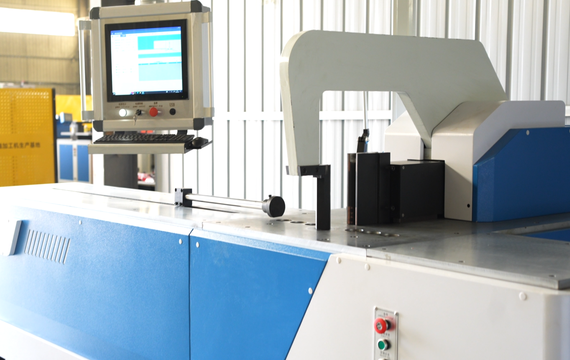
Tooling should be verified with actual busbar material and representative drawings before purchase. During sample testing, inspect bending angle, bending radius, finished dimensions, surface condition, repeatability, and whether the part fits the intended assembly. This reduces setup rework after delivery.
Busbar Bending Machine FAT Acceptance Checklist
Before shipment, the FAT should record sample drawings, material grade, thickness, bending angle, bending radius, sample quantity, measuring tools, angle tolerance, dimensional tolerance, surface condition, repeatability, tooling list, safety functions, manuals, electrical drawings, spare parts, and operator training scope.
What Should You Send For An Accurate Quotation?
For a faster and more accurate quotation, send CAD or PDF drawings, material grade, copper or aluminum temper, width × thickness range, bending angle, bending radius, tolerance, daily output, required automation level, voltage, workshop space, and whether punching or cutting is also required.
Verify Supplier Testing Capability
Before purchasing, confirm whether the supplier can test your drawings with actual or equivalent material. A professional supplier should evaluate material grade, thickness range, bending radius, tooling limits, springback, and production risks before recommending a final machine configuration.
FengHua Drawing-Based Busbar Bending Machine Selection Process
Before recommending a busbar bending machine, Fenghua engineers review your drawings, busbar material, size range, bending requirements, tooling needs, production volume, and factory conditions. Based on this review, Fenghua can recommend a hydraulic busbar bending machine, CNC servo bending machine, or 3-in-1 busbar processing solution.
| Evaluation Item | What FengHua Reviews | Why It Matters |
| Busbar Material | Copper or aluminum material, grade and surface condition | Requires different tooling and process settings |
| Busbar Size Range | Width, thickness and maximum processing dimensions | Ensures the machine matches your actual products |
| Bending Requirements | Bending angle, direction, radius and forming shape | Helps confirm suitable tooling and bending method |
| Production Volume | Daily output, order changes | Determines whether hydraulic or CNC solutions are more suitable |
| Drawing Complexity | Standard parts, complex bends and special requirements | Identifies possible interference and processing limitations |
| Tooling Requirements | Standard tooling or customized tooling needs | Ensures stable production after installation |
| Finished-Part Requirements | Assembly dimensions and repeatability requirements | Reduces adjustment work and production risks |
| Factory Conditions | Power supply, workshop space and operating environment | Helps confirm installation compatibility |
FengHua hydraulic busbar bending machine, CNC servo busbar bending machine, or 3-in-1 busbar processing solution according to your production requirements.
Frequently Asked Questions
Can One Busbar Bending Machine Process Copper And Aluminum?
Many busbar bending machines can process both copper and aluminum, but tooling, bending parameters, and springback compensation should be adjusted according to material grade, temper, thickness, and surface condition.
Can A CNC Busbar Bending Machine Work Without Skilled Operators?
A CNC busbar bending machine can reduce dependence on manual measurement, but operators still need training in program selection, tooling setup, material positioning, safety checks, and finished-part inspection.
What Drawings Should You Prepare Before Selecting A Busbar Bending Machine?
Prepare drawings for standard products, complex bent parts, maximum-size parts, and parts with strict tolerance requirements. Also provide material type, thickness range, bending angle, bending radius, production volume, and surface requirements so the supplier can recommend the right equipment.
How Much Does A Busbar Bending Machine Cost?
The price of a busbar bending machine depends on machine type, bending capacity, automation level, tooling configuration, control system, and customization requirements. Hydraulic machines usually require lower investment, while CNC servo solutions cost more because of positioning and control functions. Accurate pricing requires drawings, material specifications, size range, bending angles, production volume, tooling needs, and factory power conditions.
What Is The Difference Between A Busbar Bending Machine And A 3-In-1 Busbar Machine?
A busbar bending machine focuses mainly on bending performance, tooling flexibility, forming accuracy, and repeatability. A 3-in-1 busbar processing machine combines punching, shearing, and bending in one platform. Choose a dedicated bending machine when bending quality is the main requirement; choose a 3-in-1 machine when your workflow needs complete busbar fabrication in one production area.
Submit Your Busbar Drawings
Send your busbar drawings, material grade, width × thickness range, bending angles, bending radius, required tolerance, production volume, and factory power information. FengHua engineers can review your application and recommend whether a hydraulic, CNC servo, or 3-in-1 busbar processing machine is more suitable before quotation.