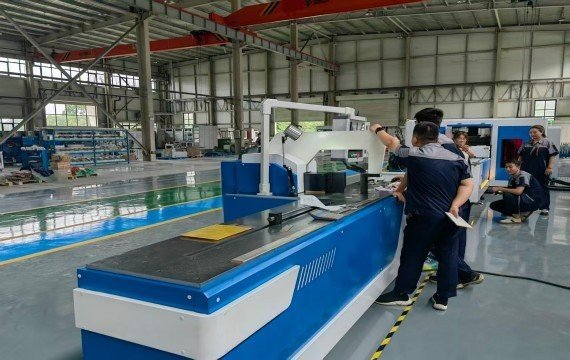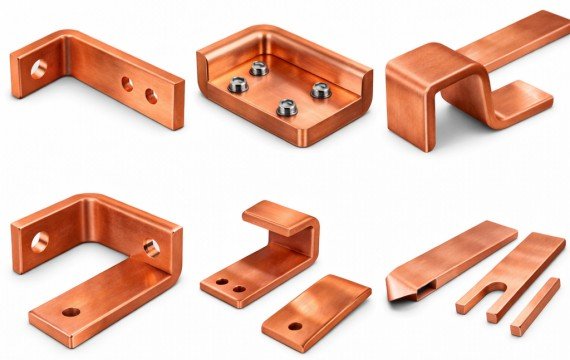
A busbar cutting machine should be selected according to your material, drawing tolerance, finished-cut quality, and production pattern. Poor burr control, end deformation, or inconsistent length can add rework during punching, bending, assembly, and electrical inspection. This guide explains how to compare hydraulic, CNC, automatic, and 3-in-1 machines by cutting method, positioning system, tooling, sample testing, FAT records, and supplier support.
Quick Answer
Busbar cutting machines are commonly configured as hydraulic cutting machines, CNC or servo-positioned machines, automatic punching and shearing lines, and 3-in-1 processing machines.
For flexible custom orders, start with a hydraulic cutting machine. For repeated cutting lengths, consider CNC or servo positioning. For higher-volume punching and cutting, evaluate an automatic punching and shearing line. If punching, shearing, and bending are all required in one area, compare a 3-in-1 busbar processing machine.
What Specifications Should You Confirm Before Buying?
Before selecting a busbar cutting machine, it is essential to define your production requirements instead of focusing only on the machine’s maximum cutting capacity. A complete specification sheet helps equipment suppliers recommend the correct configuration while ensuring consistent cutting quality and production efficiency.
The following items should be confirmed before requesting a quotation:
| Specification | Why It Matters |
|---|---|
| Material grade | Copper, aluminum, laminated busbar, or other conductive materials require different cutting characteristics. |
| Temper | Soft, half-hard, or hard temper affects cutting force, blade wear, and burr formation. |
| Width × thickness | Determines whether the machine has sufficient cutting capacity and blade clearance. |
| Raw bar length | Influences feeding system design and workspace requirements. |
| Finished length tolerance | Defines the positioning accuracy required for the servo feeding system. |
| Burr limit | Maximum allowable burr height determines blade quality and cutting process capability. |
| Squareness | End-face perpendicularity is critical for downstream bending, welding, and assembly. |
| Surface protection | Film-coated or painted busbars may require protective handling to avoid scratches. |
| Cycle time | Production speed determines machine configuration and automation level. |
| Positioning method | Manual stop, servo positioning, or CNC positioning impacts accuracy and productivity. |
| Feeding dead zone | The minimum remaining length that cannot be fed automatically affects material utilization. |
| Blade replacement lead time | Knowing spare blade availability helps reduce production downtime and maintenance risks. |
Quick Busbar Cutting Machine Selection
| Production Requirement | Typical Starting Solution | Critical Buyer Check |
| Flexible customized orders | Hydraulic Busbar Cutting Machine | Material range, tooling and manual positioning time |
| Repeated cutting lengths | CNC Or Servo-Positioned Cutting Machine | Controlled axis, program recall and finished-length variation across repeated parts |
| Repeated punching and cutting | Automatic CNC Punching And Shearing Line | Feeding range, gripping limits and conforming output |
| Punching, shearing and bending in one area | 3-In-1 Busbar Processing Machine | Capacity, simultaneous operation and hydraulic-system arrangement |
Why Does Busbar Cutting Quality Matter?
Finished-cut quality matters more than cutting force or cycle time alone.Excessive burrs can increase deburring and handling work, while end deformation or inconsistent lengths may affect downstream punching, bending, connection, and final assembly.
A fast machine provides limited production value if operators must correct or sort parts after every cutting cycle.
How Does A Busbar Cutting Machine Work?
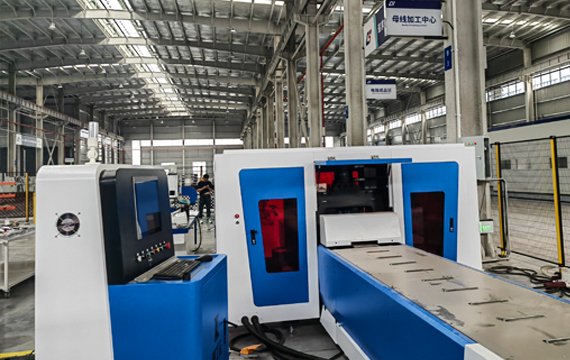
Busbar cutting machines commonly separate copper or aluminum busbars with a shearing blade and matched cutting tooling. Saw cutting may be used when a drawing, material condition or required end profile makes shearing unsuitable. The finished result depends on blade clearance, blade condition, material grade and temper, clamping stability, material support and positioning control.
Stable cutting force alone does not guarantee a qualified part. Tool alignment and material movement influence the finished cut, while the inspection result is measured and reported.
Which Finished-Cut Results Should You Inspect?
Inspect finished length, cut squareness, maximum burr height, end deformation and visible surface damage. Before sample testing or FAT, agree on the tolerance, measuring instrument, sample quantity, measurement locations, inspector and acceptance method.
For a continuous cutting test, record final parts instead of reporting only one selected sample. The results should be recorded in the FAT document with part numbers, measured values, and acceptance status.
What Are The Main Types Of Busbar Cutting Machines?
Hydraulic, CNC, automatic, and 3-in-1 describe different machine categories. Hydraulic describes how cutting force is generated, CNC describes how the process is controlled, automatic describes material handling, and 3-in-1 describes integrated punching, shearing, and bending functions. Because these labels can overlap, confirm the actual functions, controlled axes, feeding and unloading scope, rated capacity, and finished-part tolerance in the quotation.
Hydraulic Busbar Cutting Machine
A hydraulic busbar cutting machine is suitable for flexible production involving different copper or aluminum busbar specifications. It is usually easier to operate than a fully automatic line, but the buyer must still verify tooling, positioning method, material support, and operator measurement time.
Before purchasing, confirm the actual width × thickness combinations, material grade, blade configuration, support method and positioning process. An unsuitable capacity or tooling combination may result in incomplete cutting, excessive burrs, end deformation or frequent manual correction. This configuration is practical when product dimensions change frequently and automatic feeding would provide limited value compared with its added setup and investment requirements.
CNC Positioning And Automatic Busbar Cutting Systems
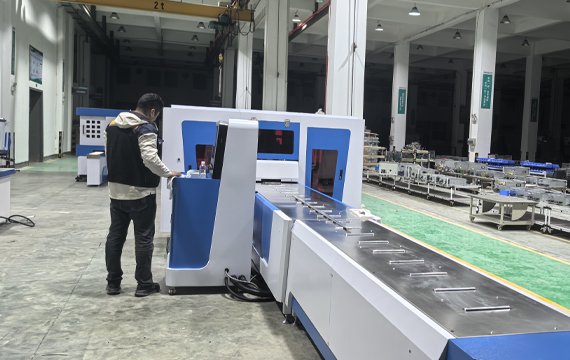
A CNC or servo-positioned busbar cutting machine reduces repeated manual measurement by moving a controlled axis to an approved cutting length. An automatic system may add material feeding, gripping, punching, cutting and unloading functions.
For repeated or higher-volume production, these functions require handling and operator involvement. You should confirm which axes and movements are actually controlled, how programs are stored and recalled, and what happens when the material reaches the gripper dead zone. A CNC label alone does not prove automatic feeding, unloading, or a specific finished-part tolerance.
3-In-1 And Integrated Busbar Processing Systems
A 3-in-1 busbar processing machine combines punching, shearing and bending within one production platform. It can reduce equipment footprint when your normal workflow requires all three processes, but each station should still be verified separately. The cutting, punching and bending stations should be evaluated separately because their rated capacities may differ.
You should confirm whether the stations can operate simultaneously and, where hydraulic power is shared, how the system affects cycle time, oil temperature, and production flow.
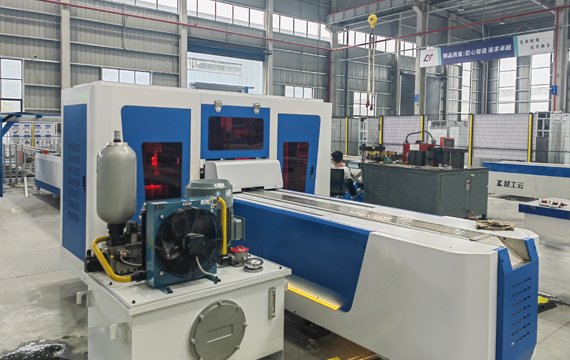
Common Busbar Cutting Machine Configurations
| Machine Configuration | Best For | Main Advantages | Main Limitations | Typical Application |
| Hydraulic Cutting Machine | Flexible and customized production | Simple operation, flexible tooling and stable hydraulic force generation | More manual measuring and positioning | Custom electrical manufacturing |
| CNC Or Servo-Positioned Cutting Machine | Repeated lengths and frequent order changes | Program recall and reduced repeated measurement | Requires program management, operator training | Switchgear and panel production |
| Automatic Punching And Shearing Line | Repeated or higher-volume production | Automatic feeding and reduced handling | Requires process planning, floor space and capacity matching | Medium and large electrical factories |
| 3-In-1 Processing Machine | Punching, shearing and bending in one area | Integrated punching, shearing and bending | Each station requires independent verification | Factories requiring multiple busbar processes |
How Do Cutting Methods And Positioning Systems Differ?
The cutting method determines how the busbar is separated, while the positioning system determines how the material is advanced to the required length. These two aspects should be evaluated separately.
Shearing And Blade Cutting
Shearing is widely used for copper and aluminum busbar production because it generally provides a short cutting cycle with limited chip generation.The finished edge still depends on blade clearance, blade sharpness, tooling alignment, clamping and material support.
Unsuitable clearance may increase burrs, local deformation, and secondary correction work.
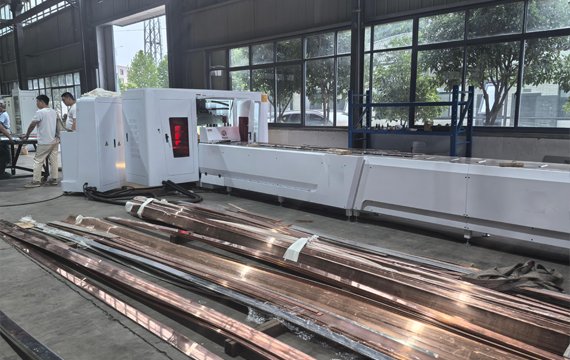
Saw Cutting
Saw cutting may be considered when the required end profile, material condition or drawing makes conventional shearing unsuitable. It normally creates chips and kerf loss and may require a longer cutting cycle than shearing. The finished edge depends on blade type, feed rate, material support and machine stability, so saw cutting should not automatically be treated as the higher-quality option.
Compare cutting time, blade life, kerf loss, chip handling and secondary finishing before selecting this method.
Manual, Servo And Automatic Positioning
Manual positioning remains flexible for varied low-volume repeated measuring, marking, and operator adjustment. Servo positioning moves a controlled axis to a programmed length and is more useful for recurring dimensions. Automatic feeding can reduce repeated handling in longer batches, but the feeding range, gripping method, gripper dead zone, and minimum remaining length must be confirmed before purchase.
Do not assume that automatic feeding is always the better choice for highly varied one-off parts, where programming and setup may take longer than manual positioning.
Cutting And Positioning Options
| Category | Option | Main Value | Critical Buyer Check |
| Cutting Method | Shearing | Fast cut with limited chip generation | Burr, deformation, blade clearance and support |
| Cutting Method | Saw Cutting | Projects requiring a saw-cut process | Cutting time, blade life, kerf loss and chip handling |
| Positioning | Manual Measurement | Flexible for varied low-volume production | Total measurement and marking time |
| Positioning | Servo Positioning | Reduces repeated manual positioning | Axis travel, accuracy, repeatability, program control |
| Positioning | Automatic Feeding | Supports repeated and longer batches | Gripping range, dead zone and minimum remaining length |
Positioning accuracy and repeatability should be reviewed separately from the measured accuracy of the finished cut.
Which Applications Use Busbar Cutting Machines?
Different manufacturing sectors use busbar cutting machines in different ways. You should select equipment based on product structure, production batch sizes, and subsequent processing steps.
Switchgear And Electrical Panel Production
Switchgear manufacturers often process repeated lengths across multiple cabinets, handling frequent order changes.
A CNC or servo-positioned cutting machine can reduce repeated measurement when approved programs are stored and recalled.
You should verify measured finished-length variation, program recall, changeover time, punching, and bending.
Transformer And Power Equipment Manufacturing
Transformer and power equipment manufacturers often process wider, thicker, or longer busbars. Confirm material grade and temper, width × thickness combinations, raw-bar length, finished-length tolerance, end condition, loading support, and available floor space.
Do not assume that maximum width, maximum thickness, maximum raw-bar length and maximum production rate can all be achieved under the same test condition.
Busduct, Energy Storage And EV Equipment
Busduct manufacturers often process longer conductors with repeated cutting lengths, and EV equipment may involve compact parts and frequent model changes.
For busduct production, verify raw-bar support, feeding length, and finished-length space. For EV parts, confirm minimum cutting length, gripping clearance, surface protection, and deformation near the material end.
How To Choose The Right Busbar Cutting Machine
The right machine should be selected from your actual products rather than the advertised model name or maximum catalog capacity. Provide representative production volumes and finished-part requirements so the supplier can evaluate the configuration under comparable conditions.
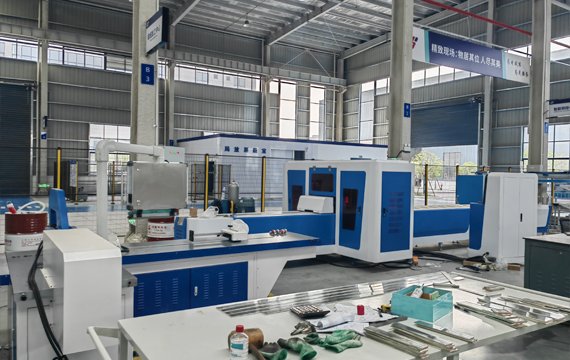
Match Capacity To Actual Busbar Specifications
Provide drawings for one common part, one maximum-demand part and one difficult cutting or handling part. Different products may create different capacity, gripping or support limits, so each critical condition should be evaluated separately.
This reduces the risk of selecting a machine from one maximum-size value that does not represent your normal production.
Match Positioning And Automation To Your Production Pattern
For varied low-volume work where repeated automatic feeding offers limited value, a hydraulic solution with manual or digital positioning may be practical. Servo positioning becomes more valuable when you process recurring lengths or switch frequently between approved programs.
Automatic feeding may reduce repeated measurement for longer or higher-volume batches. Compare conforming parts per shift, changeover time, operator requirements, scrap rate, and maintenance workload.
Verify Tooling, Cut Quality And Sample Results
Ask the supplier to process your actual material or an agreed equivalent using representative drawings. Inspect finished length, squareness, maximum burr height, end deformation, surface condition, and variation.
Before testing, agree on the sample quantity, measuring instruments, measurement locations and acceptance criteria. A short continuous test can reveal obvious short-run variation, but it should not be presented as proof of long-term process capability.
Busbar Cutting Machine Buyer Checklist
| Buying Factor | What You Should Confirm |
| Material | Copper or aluminum grade, temper, coating and surface condition |
| Capacity | Actual width × thickness combinations and raw-bar length |
| Finished Quality | Length tolerance, squareness, burr and deformation requirements |
| Positioning | Manual measurement, digital display, servo positioning or automatic feeding |
| Tooling | Included blade, spare blade, custom tooling and replacement lead time |
| Output | Conforming parts per shift, conforming parts and test conditions |
| Testing | Representative material, sample quantity and agreed inspection method |
| Factory Conditions | Voltage, frequency, phase, floor space and loading direction |
| Safety | Guarding, emergency stop, interlocks and safe loading procedure |
| Delivery Scope | Machine configuration, included tooling, spare parts, documents and installation responsibilities |
Request A Drawing-Based Machine Recommendation
To receive a more accurate quotation, send your busbar drawings, material grade, width × thickness range, finished length tolerance, expected output per shift, voltage, available floor space, and preferred loading direction. Fenghua can review whether hydraulic cutting, CNC positioning, automatic feeding, or a 3-in-1 busbar processing machine is more suitable before quotation.
How Should You Evaluate A Busbar Cutting Machine Supplier?
A reliable busbar cutting machine supplier should do more than provide a catalog and quotation. The supplier should review your drawings, identify processing and handling limits, and demonstrate the proposed configuration, installation, and maintenance.
For international buyers, tooling availability and spare-parts lead time can be as important as the machine itself.
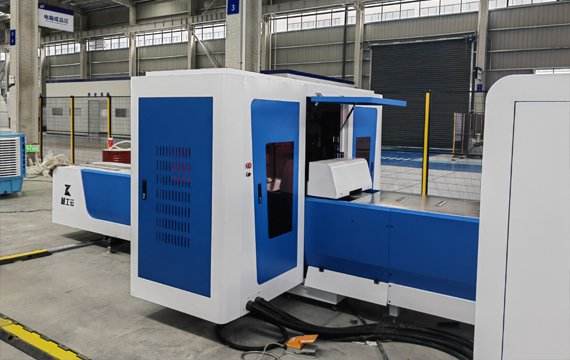
Can The Supplier Review Your Drawings?
Ask the supplier to review your product drawings before final model selection. The written review should confirm the material, size range, cutting lengths, positioning method, tooling configuration, handling limits, and unsupported features or operating conditions. The recommendation should identify the corresponding machine rather than only stating that the part.
Can The Supplier Perform Sample Testing And FAT?
Sample testing should use agreed drawings, materials, measuring instruments and acceptance criteria. The FAT record should include finished length, squareness, maximum burr height or an agreed burr acceptance method, end deformation, variation across repeated parts, changeover procedures, safety functions and program control where applicable. Acceptance criteria should be confirmed before testing begins, not after the results are available.
What Documentation And Support Should Be Included?
A reliable supplier should provide operation and maintenance manuals, electrical schematics, tooling lists, configuration sheets, and spare-parts information. Confirm tooling availability, replacement-part lead times, remote technical support, and after-sales response procedures. Clear support, troubleshooting, and spare-parts planning after delivery. Confirm that the manuals, electrical drawings and HMI language are available in an agreed language before shipment.
Busbar Cutting Machine Supplier Evaluation Table
| Evaluation Item | What Should Be Verified | Why It Matters |
| Drawing Review | Written review connected to a specific machine | Prevents selection based only on catalog capacity |
| Material And Size | Grade, temper, width, thickness and raw-bar length | Confirms actual cutting and handling requirements |
| Tooling | Included blade, spare blade and custom options | Supports production and future replacement |
| Sample Testing | Actual or agreed equivalent material | Confirms finished-cut quality under representative conditions |
| FAT | Agreed criteria, instruments, records and sign-off | Reduces delivery and acceptance disputes |
| Technical Documents | English manuals, drawings and configuration lists | Supports installation and maintenance |
| After-Sales Support | Response method and lead time | Reduces downtime after delivery |
| Configuration Consistency | Quotation, technical agreement, FAT record and nameplate show the same | Prevents specification changes before delivery |
| Delivery Scope | Included tooling, spare parts, documents, installation and training responsibilities | Prevents unexpected costs after shipment |
| Safety | Guarding, emergency stops, interlocks and documented safe loading and operating procedures | Confirms the proposed machine includes the agreed safety configuration |
Frequently Asked Questions
How Often Should A Busbar Cutting Blade Be Replaced?
Tool life depends on the material, thickness, processing volume, and maintenance. Replace the tool if there are increased burrs, end deformation, or a decline in cut quality. Before purchasing, confirm replacement-blade pricing, material specification, heat-treatment requirement, drawing availability, and international lead time.
Can One Machine Cut Both Copper And Aluminum Busbars?
Many busbar cutting machines can cut both copper and aluminum, but blade clearance and cutting parameters should not be assumed for every grade, temper, and thickness. Ask the supplier to test your actual material or an agreed equivalent and verify burrs, deformation and finished-cut quality. For coated, plated or surface-sensitive busbars, the feeding, clamping and support system creates scratches or pressure marks.
What Causes Excessive Burrs During Busbar Cutting?
Excessive burrs may result from tool wear, improper clearance, alignment, and material support. You should first inspect the tooling. The supplier should demonstrate the agreed burr acceptance level using the specified material during sample testing.
What Information Should You Send Before Requesting A Quotation?
Provide representative drawings, material grade and temper, width and thickness range, raw-bar length, finished-length tolerance, and batch quantity. Also state whether you need manual positioning, servo positioning, automatic feeding, or integrated punching and cutting. Also provide voltage, frequency, phase, available floor space, and preferred loading direction so the supplier can prepare a complete machine proposal.
Final Thoughts
A busbar cutting machine requires more than comparing rated capacity, automation labels, and price. Your decision should be based on actual materials, finished-cut requirements, production patterns, tooling, and representative sample results. If you are unsure whether hydraulic cutting, servo positioning, automatic feeding, or a 3-in-1 system fits your production, send your drawings and required output. Fenghua can review the material range, tolerance, tooling, and FAT criteria before quotation.