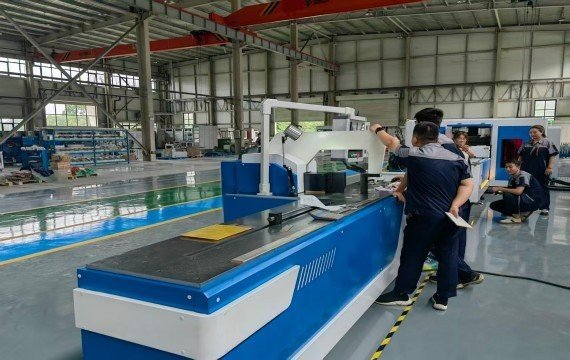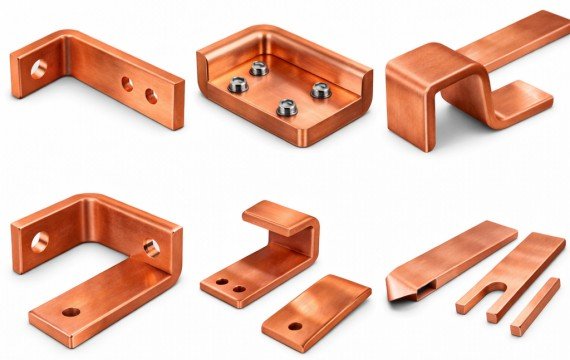
In industrial production, the real concern is not whether a bending machine can complete a bend. What matters is whether the machine can maintain stable accuracy during long-term batch production.
Why Industrial Buyers Search “How to Make a Bending Machine”
Most industrial buyers searching “how to make a bending machine” are not trying to build equipment themselves.
They are usually evaluating how an industrial bending machine is manufactured, what affects long-term stability, and why different machines perform differently after entering real production.
In busbar fabrication and switchgear manufacturing, many problems only appear after continuous operation. Some machines begin showing angle variation after repeated bending. Others become highly dependent on experienced operators to maintain consistency.
Because of this, experienced buyers focus more on machine structure, hydraulic configuration, tooling quality, and CNC control stability than on appearance or simple specifications.
What Actually Determines the Stability of a Bending Machine
Machine stability is usually determined by the overall manufacturing quality of the system.
Frame rigidity, machining precision, hydraulic consistency, tooling accuracy, and controller stability all affect final bending performance.
In copper busbar bending, small structural differences become obvious once production enters continuous batch operation. Weak frame structures may gradually affect positioning accuracy, while unstable hydraulic pressure can change final bending angles during long production runs.
Stable bending is not controlled by one component alone. It depends on whether the entire system remains consistent under repeated operation.
How the Machine Frame Is Manufactured
The frame is one of the most important parts of an industrial bending machine.
In real production, the frame is not simply welded together. Cutting accuracy, welding sequence, stress relief treatment, and machining precision all influence long-term stability.
If welding stress is not properly controlled, deformation may gradually appear during operation. In busbar bending applications, repeated pressure concentration makes frame rigidity even more important.
This is why many industrial buyers pay close attention to frame processing quality when selecting a bending machine supplier.
How Hydraulic Systems Affect Bending Consistency
Hydraulic systems directly affect angle consistency during continuous production.
In many workshops, hydraulic instability does not appear immediately. Problems usually begin after long operating hours when oil temperature changes start affecting pressure output.
Different copper busbar thicknesses also react differently under force. Small pressure fluctuations can gradually create angle variation during repeated production.
For this reason, hydraulic pressure stability and cylinder synchronization are critical factors in industrial bending machine manufacturing.
How Tooling Design Influences Busbar Bending Accuracy
Tooling directly affects bending repeatability.
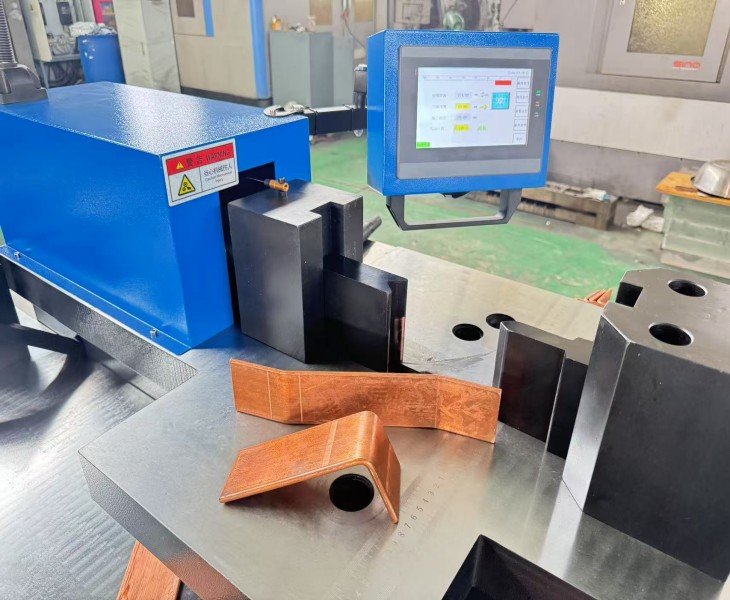
Different busbar thicknesses require different die selection and bending radius control. Incorrect tooling matching can lead to deformation marks, cracking, or unstable spring back.
Tool wear also changes bending consistency over time. Even when machine parameters remain unchanged, worn tooling can still affect final bending results.
In many factories, tooling management is treated as part of production stability rather than a simple accessory issue.
Why CNC Integration Is Becoming Standard in Busbar Fabrication
As production volume increases, manual adjustment becomes harder to control consistently.
Different operators often create small variations in positioning and parameter adjustment. These differences may not appear during machining but become visible during final assembly.
CNC busbar bending machines help reduce this variation through stored parameters and repeatable positioning control.
For export switchgear production, repeatability is often more important than speed because assembly tolerance requirements are stricter.
How Industrial Bending Machines Are Tested Before Delivery
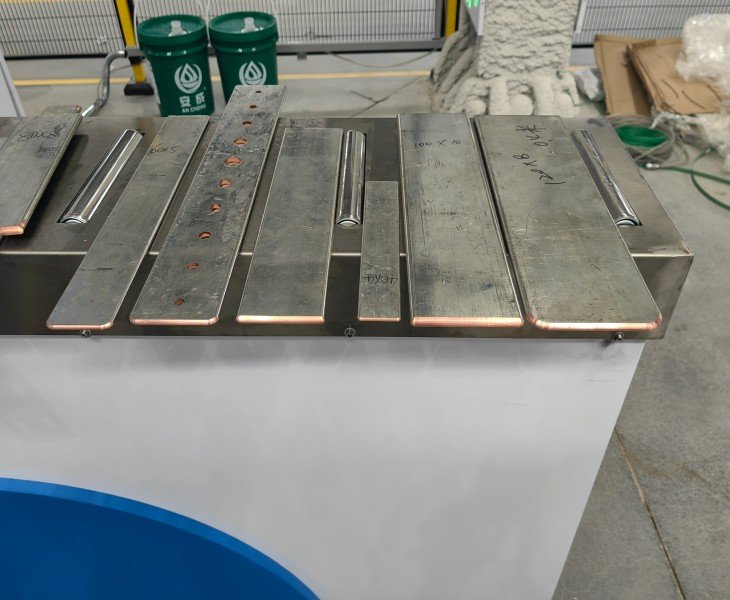
Industrial bending machines are usually tested under repeated operating conditions before delivery.
Manufacturers commonly check angle consistency, hydraulic response, tooling alignment, and repeatability using different copper busbar thicknesses.
Some factories also simulate continuous production conditions because certain stability problems only appear after repeated operation cycles.
These testing procedures help evaluate whether the machine can remain stable during real production.
Common Problems Found in Low-Quality Bending Machines
Many production problems develop gradually rather than appearing immediately.
Low-quality bending machines may begin showing angle drift, unstable pressure output, or positioning deviation after long-term operation.
Some machines also become highly dependent on operator experience because repeatability is weak.
Tooling mismatch can create cracking, deformation, or inconsistent bending results across different busbar batches.
In most cases, these problems are related to overall manufacturing quality rather than a single component failure.
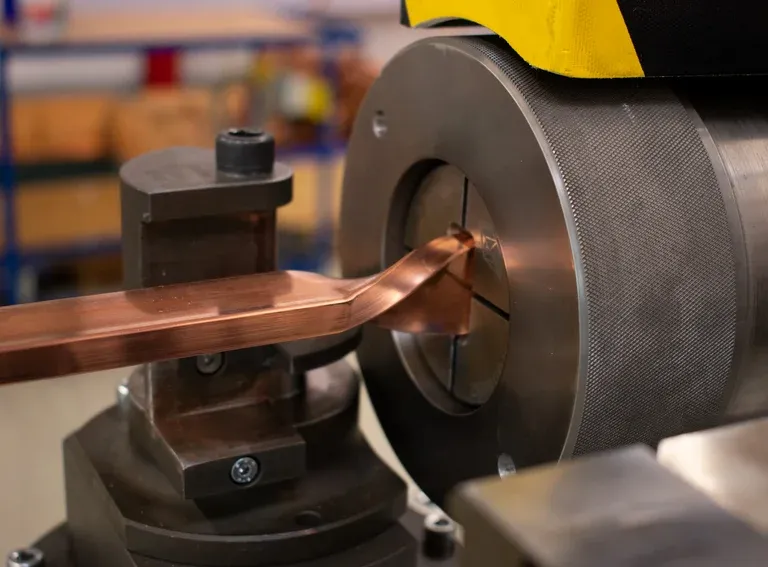
Manual vs CNC Bending Machine in Modern Busbar Production
Manual bending machines are still suitable for small workshops and flexible production environments.
However, in repeat production and multi-shift manufacturing, maintaining consistent output manually becomes more difficult.
Operator habits, positioning methods, and pressure adjustment differences gradually affect assembly consistency.
This is why more factories are adopting CNC busbar bending systems to improve repeatability across different production cycles.
Why More Electrical Panel Manufacturers Upgrade to CNC Busbar Bending Machines
Many manufacturers upgrade to CNC systems because production consistency becomes harder to maintain manually as order volume increases.
Export projects also require tighter tolerance control and more stable assembly results.
CNC busbar bending machines help standardize positioning, parameter control, and repeated operation throughout the production process.
For most factories, the main advantage is stable output rather than higher production speed.
FAQ
Why do some bending machines lose angle accuracy over time?
Frame deformation, hydraulic instability, and tooling wear can gradually affect bending consistency during long production cycles.
Does frame structure affect busbar bending precision?
Yes. Poor frame rigidity can influence positioning stability and repeated bending accuracy.
What is the most important part of a CNC bending machine?
Stable production depends on the combination of frame structure, hydraulic control, tooling accuracy, and CNC positioning.
Why do hydraulic bending machines become unstable during continuous operation?
Oil temperature changes and pressure fluctuation can gradually affect bending consistency during long operating hours.
Can one bending machine process different copper busbar thicknesses?
Yes, but tooling and parameter adjustment are required to maintain stable bending accuracy.
Final Note
In busbar fabrication, long-term production stability matters more than single bending performance.
The key question is whether the machine can maintain consistent results across repeated production cycles, different operators, and changing working conditions.