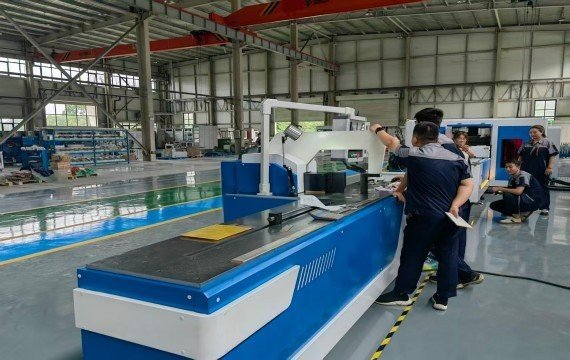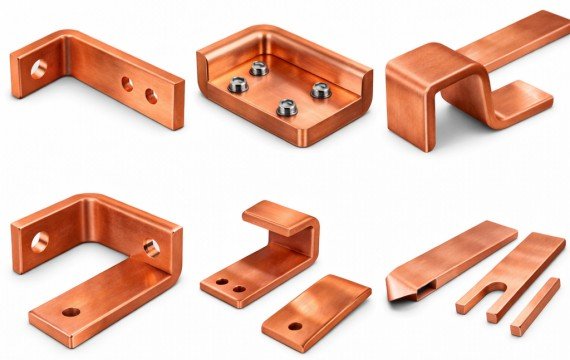
Busbar processing machines cut, punch, and bend. Inappropriate automation configurations can increase machine setup time and reduce production explains how to compare busbar processing functions, configurations, specifications, production output, supplier evidence, and FAT requirements before purchase.
Quick Answer
A 3-in-1 busbar processing machine integrates cutting, punching, and bending stations within one production area, which can reduce workpiece transfer when they are regularly required.nts before purchase.
A CNC-controlled or servo-positioned configuration is suitable for recurring parts that require stored programs, reusable positioning values and fewer repeated manual measurements.
A hydraulic system provides processing force and may be used in manual, CNC or automatic machines, so hydraulic and CNC should not be treated as opposite machine types.
Automatic feeding and positioning, stable, recurring production volume can justify the additional investment.
The correct busbar drawings, material grade and temper, width × thickness combinations, processing sequence, finished-part tolerances, output target, and budget.
Quick Busbar Processing Machine Selection
| Production Requirement | Recommended Starting Configuration | Critical Buyer Check |
| Cutting, punching and bending in one production area | 3-In-1 integrated layout | Individual station capacity, tooling and simultaneous operation |
| Recurring parts and frequent drawing changes | CNC or servo positioning | Controlled axes, program recall and measured part variation |
| Customized work with frequent size changes | Flexible tooling with positioning selected and tolerance | Setup time, operator involvement and tooling-change requirements |
| Stable, higher-volume recurring production | Automatic feeding and positioning system | Feeding range, gripping limits, output |
Do Manufacturers Need Busbar Processing Machines?
Traditional production uses standalone machines to perform different processing tasks; material handling, positioning, and machine changeovers add to production time.
An integrated busbar processing machine can simplify production flow when it has station capacities, tooling, and process sequence parts.
Reduce Separate Processing Operations
Traditional busbar processing requires transferring materials between cutting, punching, and bending machines, which involves loading/unloading, positioning, and waiting.
A 3-in-1 copper busbar processing machine can reduce transfer between cutting, punching and bending stations. Whether several stations can operate simultaneously depends on the proposed hydraulic, control and safety configuration and should be verified before purchase.
Improve Busbar Manufacturing Consistency
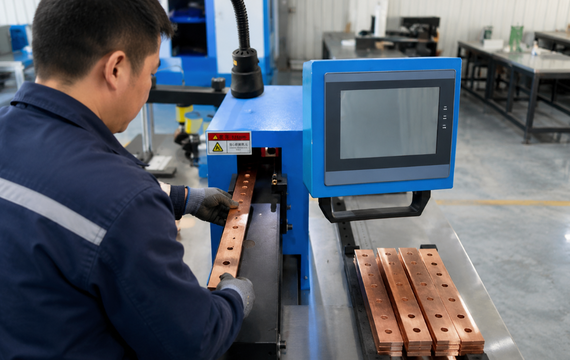
Busbar dimensions, hole positions and bending results affect alignment and assembly during electrical equipment production. Deviations in cutting length or hole positioning can necessitate time-consuming adjustments during subsequent installation, thereby increasing labor costs.
A CNC or servo positioning system can store approved repeated manual measurements for recurring parts. However, final results still depend on tooling, material condition, support, operator inspection, and the controlled functions of the proposed machine.
Reduce Production Preparation Time
Different customer requirements necessitate switching between product specifications. Re-measuring and adjusting equipment setup time.
CNC or programmable positioning systems may store approved processing and repeated setup for recurring parts. Actual changeover time program selection, tooling replacement, material preparation, first-part processing, measurement, and readjustment.
What Functions Does A Busbar Processing Machine Provide?
Cutting, punching, and bending dimensional accuracy of copper busbars. You must evaluate whether the machine supports actual production needs based on your specific finished product requirements.
Cutting Function
The cutting station processes copper or aluminum busbars to the required length before punching, bending or installation.
Before purchase, confirm the cutting capacity, finished-length tolerance, cut squareness, maximum acceptable burr, end deformation and replacement-blade availability. Poor cutting results may increase deburring work and affect downstream positioning, bending or final assembly.
For busbars with surface-quality requirements, verify whether the material supports and clamping scratches, pressure marks or unwanted deformation.
Punching Function
The punching station produces connection holes, mounting holes, slots and approved special shapes according to the electrical drawing.
Inaccurate hole dimensions or positions may create alignment problems during busbar connection and equipment assembly. Before purchase, confirm the hole-diameter range, hole-position tolerance, edge distance, minimum hole spacing, material thickness, deformation around the punched area and available tooling.
Representative drawings should be reviewed before quotation to confirm tooling feasibility, interference risks and unsupported hole shapes.
Bending Function
Bending results depend on the material grade and temper, busbar thickness, tooling geometry, bend radius, support method and springback behavior.
Before purchase, confirm the required bending angle, bending position, radius, springback allowance, short-edge limit, tooling interference and finished-part dimensions. Complex parts: multiple samples to verify angle variation, finished condition.
How Should You Measure Busbar Production Efficiency?
Machine action represents actual busbar production efficiency. A meaningful comparison should include material preparation, setup, processing, inspection, operator involvement and conforming output.These measurements can be used to compare proposed configurations during sample testing and FAT.
Compare Complete Cycle Time
Complete cycle time starts with material loading and ends when the finished part is inspected and approved.
It should include loading, positioning, cutting, punching, bending, material transfer, unloading and inspection. The final on conforming part rather than only hydraulic or servo action time.
Measure Changeover And First-Part Approval
Changeover time should include program selection, tooling replacement, and material preparation. First-part approval processing, measurement, correction, and final confirmation.
For recurring orders, ask the supplier to demonstrate the complete changeover process instead of only recalling a stored program.
Calculate Conforming Output
Machine cycles per minute do not show whether processed parts meet drawing and assembly requirements. A more useful measurement is conforming parts under agreed material, drawing, and inspection conditions.
The calculation should include the operators required for loading and positioning and be applied during sample testing and FAT.
What Are The Main Busbar Processing Machine Configurations?
The configuration of a busbar processing machine should be selected based on functional layout, positioning methods, and material handling requirements. Features such as CNC control, servo positioning, and automatic feeding can be integrated into a single unit.
3-In-1 Or Separate Machines
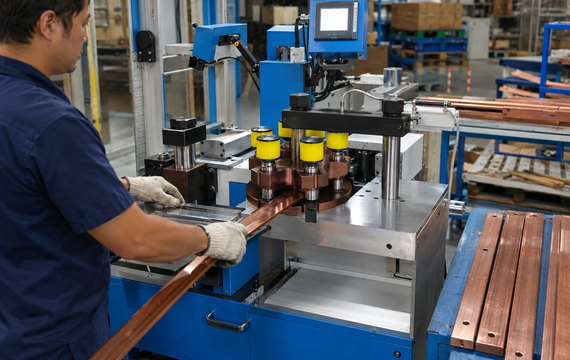
A 3-in-1 busbar processing machine integrates cutting, punching, and bending stations within one production area. It transfers when they regularly belong to the same workflow and the station capacities remain reasonably balanced.
Before purchase, confirm the capacity of each station, whether several stations can operate simultaneously, whether they share hydraulic power and whether one operation may create a production bottleneck.
Separate machines may be more practical when one process requires higher dedicated output, independent scheduling, specialized tooling or a different production layout. Compare station capacity, process balance, operator requirements, intermediate handling and available workshop space before deciding.
Manual, Digital, CNC Or Servo Positioning
Manual positioning may be practical for lower-volume or highly varied work when operator measurement is acceptable. Digital readouts display position values for operator adjustment, while CNC or servo-selected axes may store approved programs or positioning values.
Before purchase, confirm which axes are controlled, which values can be stored, and which dimensions require measurement or final alignment.
Higher positioning resolution or repeatability may improve finished-part accuracy because tooling, material condition, support, springback, and inspection methods also affect the result.
Manual Loading Or Automatic Feeding
Manual loading may be practical for varied batches, changing material dimensions and parts that require frequent operator judgment.
Automatic feeding may be suitable for recurring production with stable raw-material dimensions and predictable processing sequences. Before purchase, confirm the raw-bar length, feeding range, gripper dead zone, minimum finished length, minimum remnant, loading direction, unloading method, equipment footprint and maintenance requirements.
The proposed feeding arrangement should also be checked against your workshop space, material-storage position and operator access.
Busbar Processing Machine Configuration Comparison
| Configuration Dimension | Available Options | Best Match | Critical Buyer Check |
| Function Layout | 3-In-1 integrated or separate machines | Integrated workflow or dedicated process output | Station capacity, simultaneous operation and bottlenecks |
| Positioning Control | Manual, digital, CNC or servo | Customized work or recurring production | Controlled axes, program recall and manual alignment |
| Material Handling | Manual loading or automatic feeding | Flexible batches or stable higher-volume production | Feeding range, gripper dead zone and minimum part length |
Which Industries Use Busbar Processing Machines?
Different industrial sectors, busbar processing machines, dimensions, product structure, and production volume influence equipment selection.
Switchgear And Electrical Panels
Switchgear manufacturers often process recurring busbar cabinet models. Stored programs and reusable positioning values may reduce repeated measurement when the same approved parts return to production.
Before purchase, verify changeover time, cutting-length tolerance, hole-position tolerance, and bending-angle variation.
Transformer And Busduct Production
Transformer and busduct: wider, thicker, or longer conductors depending on the product design. The proposed machine width × thickness separates maximum catalog values.
Also confirm raw-material length, loading direction, material-support arrangement and available installation space.
Energy Storage And EV Equipment
Energy storage and EV busbars may involve compact dimensions, frequent design changes and surface-sensitive conductors. These applications may require frequent setup changes and reliable processing of shorter parts.
Before purchase, processing length, gripping clearance, tooling interference, program-changeover requirements, and material-surface protection.
Busbar Processing Machine Specification Checklist
Machine selection should be based on rather than separate maximum catalog values.
| Specification | What To Confirm |
| Material | Copper/aluminum grade, temper and surface condition |
| Busbar Size | Actual width × thickness combinations for each station |
| Raw Material Length | Loading, support and feeding requirements |
| Processing Sequence | Cutting, punching and bending order |
| Finished-Part Requirements | Cutting length, cut squareness, burr, hole position, bending angle, finished dimensions, surface condition and assembly tolerance |
| Positioning System | Manual, digital, CNC or servo positioning, controlled axes and manual alignment steps |
| Tooling | Included tools, customized dies and replacement availability |
| Production Output | Conforming parts per shift and under agreed test conditions |
| Testing | Representative samples, calibrated measuring instruments, measurement positions and criteria |
What Should You Confirm Before Buying A Busbar Processing Machine?
When purchasing a busbar processing machine, you must determine whether the equipment meets your production needs. Confirming details regarding materials, output volume, automation levels, and finished products in advance helps avoid equipment-related issues.
Material, Busbar Size And Processing Sequence
Confirm whether you process copper, aluminum or both, and provide the material grade, temper, thickness range and surface condition.
You should provide the specific width-by-thickness combinations used and the raw processing sequence (e.g., cutting, punching, bending).
Given the wide range of product specifications, it is recommended to provide drawings for both commonly produced parts and the process.
Production Target And Automation Scope
Equipment selection should take into account your daily processing volume, production shifts, frequency of product changeovers and operator staffing. Manual or digital positioning may be practical for lower-volume or varied work when operator adjustment is acceptable.
CNC or servo positioning becomes more valuable for recurring parts that require stored programs and repeated positioning.
When evaluating production capacity, focus on conforming parts per shift, conforming parts, and the number of operators required.
Finished-Part Quality
Acceptable cutting length, cut squareness, maximum burr, hole-position tolerance, edge distance, bending angle, springback allowance, surface condition, and final assembly dimensions. Positioning accuracy, repeatability, and finished-part accuracy should be specified and measured separately.
Before testing, agree on the sample quantity, measuring instruments, measurement positions, recording method and acceptance criteria.
The acceptance requirements should be written into the technical agreement before sample testing or FAT begins.
How To Choose The Right Busbar Processing Machine?
Selecting the right busbar processing machine requires considering your actual technical drawings, production methods, and long-term operational needs. Different factories vary in terms of product types, order volumes, and labor configurations.
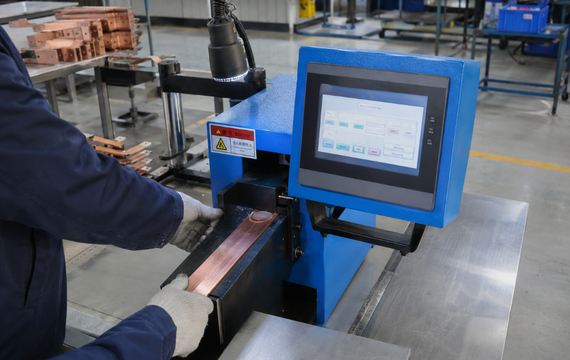
Match Machine Configuration
Manual or digital positioning may require more than automatic feeding systems when manual handling and measurement are acceptable.
CNC or servo positioning can reduce repeated measurement and shorten setup for approved recurring parts, provided that the relevant axes and functions are controlled.
Automatic feeding may be suitable for stable, recurring production, but you should first evaluate setup requirements, material range, maintenance resources, expected utilization and total investment.
Evaluate Tooling And Processing Capability
Tooling affects finished-part results, setup time and long-term operating cost.
Before purchase, confirm the included tooling, customized dies, blade specifications, tooling-changeover time, replacement prices and international supply lead times.
Representative drawings should be reviewed to verify short-edge limits, minimum hole spacing, tooling interference and unsupported processing features. The quotation should clearly distinguish included tooling from optional or project-specific tooling.
Consider Total Production Cost
Initial machine price is only one part of the purchasing decision. Compare operator requirements, tooling replacement, planned maintenance, expected downtime, material handling, setup, inspection and possible rework.
A lower-priced machine may create a if it requires more operators, longer changeovers, or frequent manual correction. Use conforming part and conforming parts when comparing proposed configurations.
Frequently Asked Questions
Does Maximum Capacity Mean All Busbars?
No. Thickness ratings do not imply universal; you should verify key width-by-thickness actual busbar specifications, material, and processing requirements.
How Do You Verify A Busbar Processing Machine Before Shipment?
It is recommended to conduct tests using actual materials, product drawings, and inspection acceptance criteria. Dimensions, bending angles, punching quality, equipment configuration, tooling, safety features, and technical documentation.
Should You Choose A 3-In-1 Machine Or Separate Machines?
A 3-in-1 busbar processing machine handles cutting, punching, and bending, reducing equipment investment and manual material handling. Standalone machines are better suited for high-volume punching or bending tasks.
Final Thoughts
A busbar processing machine requires more than comparing price, model names, and maximum catalog capacity.
Your decision should be based on actual drawings, station-specific capacity, positioning and feeding methods, tooling, conforming output, and supplier testing evidence. Representative sample testing and an agreed FAT provide approval of the machine before shipment.